Tell us about the job
Takes about a minute. No obligation.
A contractor sizing or installing a furnace in Pike County has to account for what the local climate actually demands, and the weather record here is a reasonable place to start. 73 severe weather events were recorded in Pike County, Pennsylvania between 2015 and 2024. At that rate, severe weather is a periodic presence, not a grinding constant, which means the spec on a new furnace is driven by the cold Pennsylvania winters far more than by storm frequency. Poor duct layout or an undersized heat exchanger will cost a homeowner more over the life of the system than the weather ever will. A contractor working this area prices the install around heating load and building envelope, and that is where the sizing conversation belongs.
Older ductwork carries assumptions about airflow that were baked in before modern furnace efficiencies were common, and in Pike County that gap between what the ducts were designed for and what a new unit needs is where a furnace installation gets complicated. Half the homes in Pike County, Pennsylvania were built in 1985 or earlier (2020-2024 ACS 5-year). A contractor quoting a new furnace here measures the existing duct runs and checks whether the distribution system can move air the way the replacement unit requires. If it cannot, the ductwork becomes part of the job before the furnace itself is ever ordered.
What Gets Installed With a New Furnace
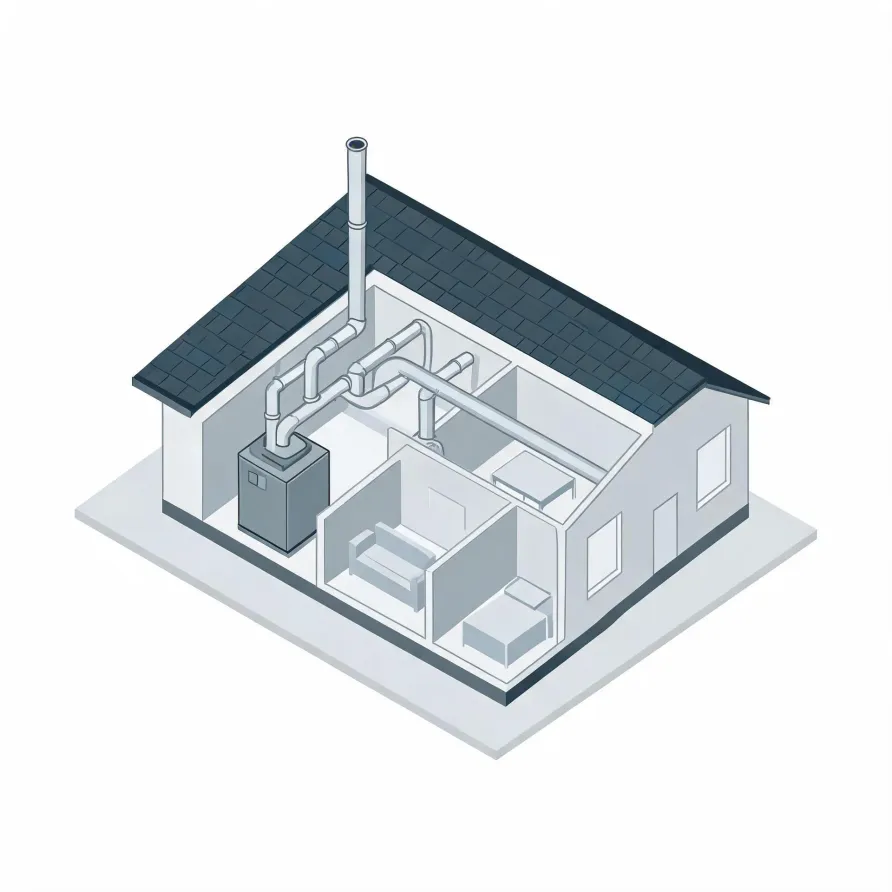
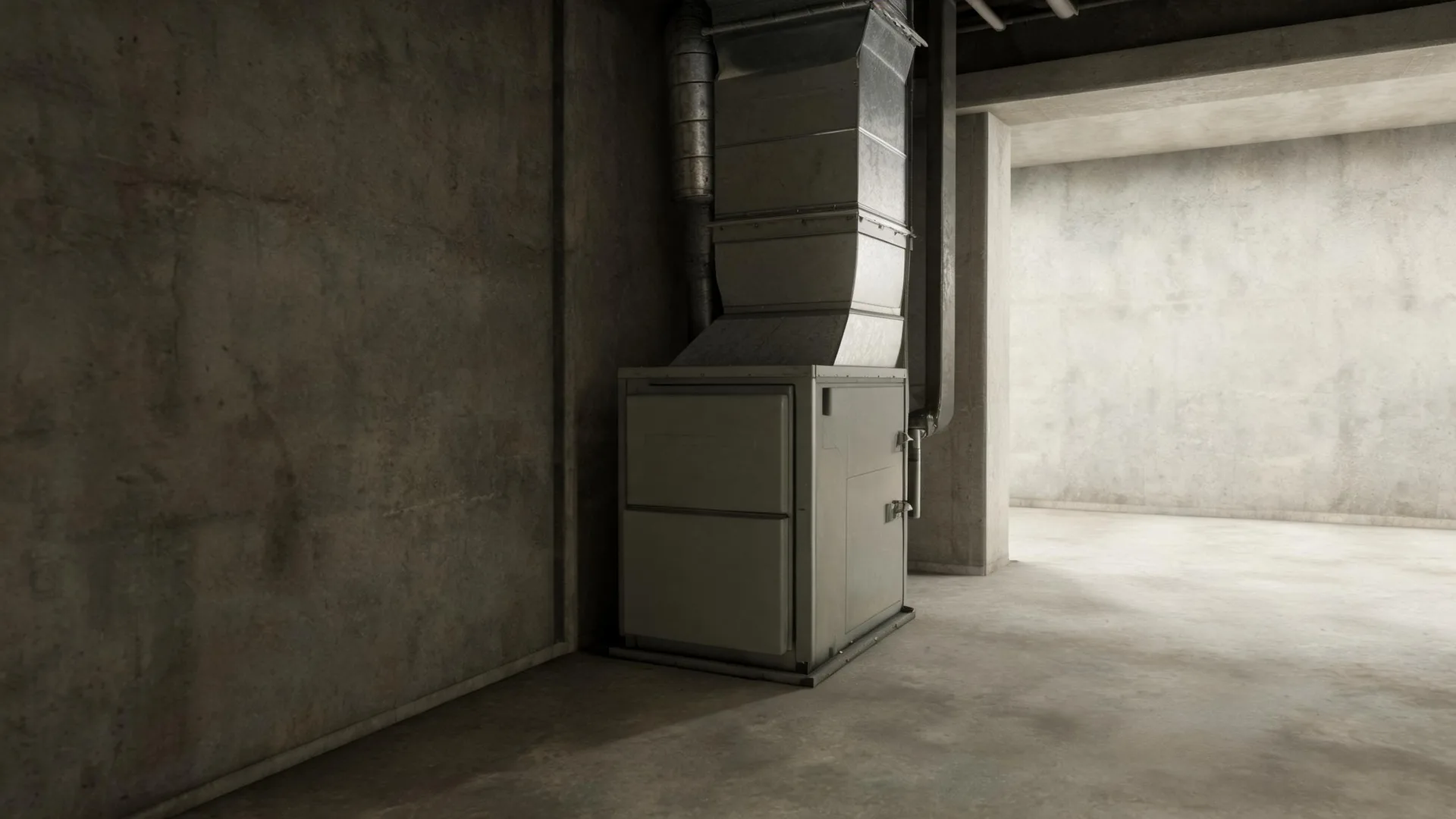
The furnace itself sits in a basement, utility room, or closet and is the core unit a contractor puts in place. A burner assembly inside it produces heat, and a heat exchanger transfers that heat to the air moving through the system. The blower motor, housed inside the same cabinet, pushes that warmed air out.
A flue pipe runs from the furnace to an exterior wall or up through the roof, carrying combustion gases out of the house. The thermostat goes on an interior wall and is the control point that tells the furnace when to fire and when to stop. A contractor also fits the gas line connection and any shut-off hardware the installation requires.
The drawing shows a typical layout, and a licensed contractor determines exactly what applies to your house and its existing setup.
Find a contractor in Pike CountyPike County, by the numbers
73 severe weather events were recorded in Pike County, Pennsylvania between 2015 and 2024.
NOAA National Centers for Environmental Information, Storm Events Database, bulk CSV export, events 2015-01-01 through 2024-12-31.Half the homes in Pike County, Pennsylvania were built in 1985 or earlier (2020-2024 ACS 5-year).
U.S. Census Bureau, 2020-2024 American Community Survey 5-Year EstimatesPike County, Pennsylvania holds 40,177 housing units (2020-2024 ACS 5-year).
U.S. Census Bureau, 2020-2024 American Community Survey 5-Year EstimatesOwners occupy 87.0% of the occupied homes in Pike County, Pennsylvania (2020-2024 ACS 5-year).
U.S. Census Bureau, 2020-2024 American Community Survey 5-Year EstimatesFurnace Installation Rules for Pike County, Pennsylvania7 sourced standards and codes
What the installation actually looks like
Non-weatherized gas furnaces manufactured on or after November 19, 2015 must reach 80.0 percent AFUE.
Non-weatherized oil-fired furnaces manufactured on or after November 19, 2015 must reach 83.0 percent AFUE.
Mobile home gas furnaces manufactured on or after November 19, 2015 must reach 80.0 percent AFUE.
Non-weatherized gas furnaces manufactured on or after December 18, 2028 must reach 95.0 percent AFUE, up from the 80.0 percent minimum that applies to units manufactured before that date.
Licensing and Legal Requirements in Pike County, Pennsylvania
Pennsylvania names the trade in its own definition: installing central heating or air conditioning is a home improvement under the Act, whether or not the equipment is affixed — so an HVAC installation is work the registration requirement reaches.
A Pennsylvania registration displaces the local one: no political subdivision may require a home improvement contractor to register, license or pay a fee on top of it, though building permits and local code enforcement still apply.
Pennsylvania requires home improvement contractor registration rather than a licence: nobody may hold themselves out as a contractor, or perform any home improvement, without first registering with the Bureau of Consumer Protection.
Severe Weather Events in Pike County
Extreme weather puts a direct load on heating equipment. A furnace sized and installed for the conditions here will hold up differently than one spec'd for a milder climate, which is why local weather history is part of the picture when making an installation decision.
73 severe weather events, 2015–2024. Source: NOAA National Centers for Environmental Information, Storm Events Database.