Profile view of a bearded man wearing a dark green baseball cap and a dark gray T-shirt against a plain light background.

Is a high-efficiency gas furnace worth it in Pennsylvania

Step 1 of 3: Equipment

Is a high-efficiency gas furnace worth it in Pennsylvania

Pennsylvania winters run long, and most homes here already heat with gas, so when a furnace needs replacing, the question isn't gas versus electric. It's which gas furnace. A high-efficiency model costs more up front, and you want to know if the difference shows up on your bill before you commit to it.

Yes, for most Pennsylvania homes running the furnace most of the year

A standard furnace sends some of the heat from burned gas straight out the flue. A high-efficiency furnace, rated 90% or higher, pulls more of that heat into your home before venting what's left, usually through a PVC pipe instead of a metal flue. In a state where furnaces run from October into April, that difference in how much gas turns into heat you actually use adds up over a full heating season, not just a cold snap. The higher the furnace runs each winter, the more that efficiency gap matters. It won't change what your gas line or ductwork can handle, but a contractor can tell you whether your home is set up for the vent change it needs.

An older woman with gray hair in a cream knit sweater sits under a blanket on a sofa by a window, looking outside toward yellow-leaved trees, with a lamp, shelves and an armchair in the room behind her.
A gray-haired woman in a chunky knit sweater sits in an armchair with a blanket, looking out a window at yellow autumn foliage, with bookshelves and a potted plant behind her.
A gray-haired woman in a navy sweater sits in an armchair with a knit blanket beside a window, looking out at yellow autumn foliage, with a dining table and houseplant in the room behind her.
A gray-haired woman in a gray cowl-neck sweater sits in an armchair with a blanket, looking out a dark-framed window toward yellow autumn trees.

What the AFUE number means

A standard gas furnace runs around 80 AFUE, so 20 cents of every dollar of gas goes out the flue instead of into your house. A high-efficiency furnace is rated 90 to 98.5 AFUE, meaning almost all the fuel you pay for turns into heat. Over a Pennsylvania winter that runs from October into April, that difference shows up on every single gas bill, not just the cold snaps. The furnace also vents through PVC pipe instead of a metal flue, which changes where it can be installed and how it ties into your home.

Where the savings run out

A high-efficiency furnace costs more to install than a standard one, and that gap takes time to close through lower gas bills. If your current furnace is old enough that the blower or heat exchanger is failing anyway, replacing it with a high-efficiency model makes sense alongside the repair you need regardless. If it's still running fine, the math depends on how many winters are left before you'd replace it either way. A contractor who looks at your ductwork and your current unit can tell you where your furnace falls on that line.

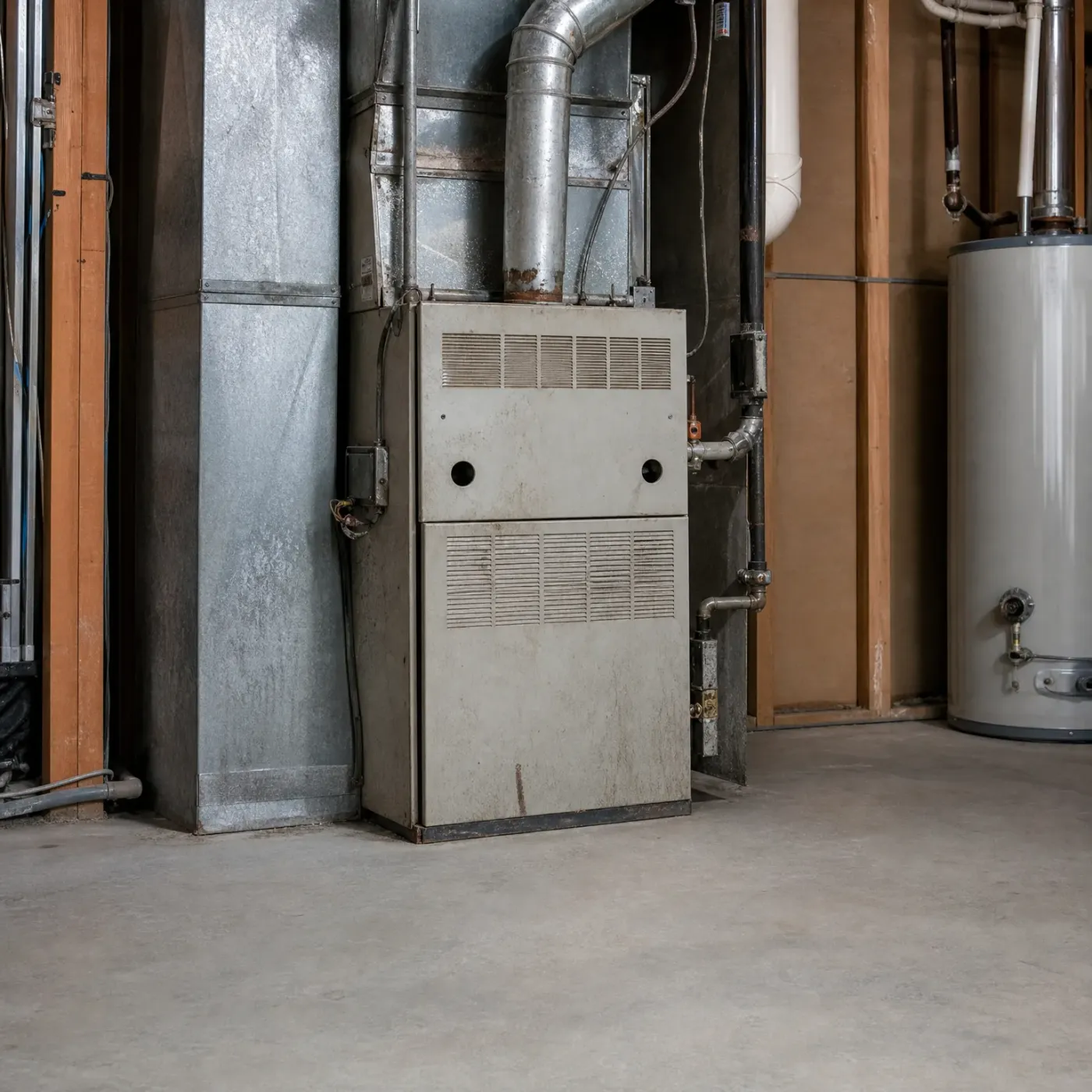
An older beige furnace with louvered front panels stands on a concrete basement floor beside galvanized ductwork, metal and plastic pipes, exposed wood framing, and a cylindrical water heater at right.
Before you get your furnace installation
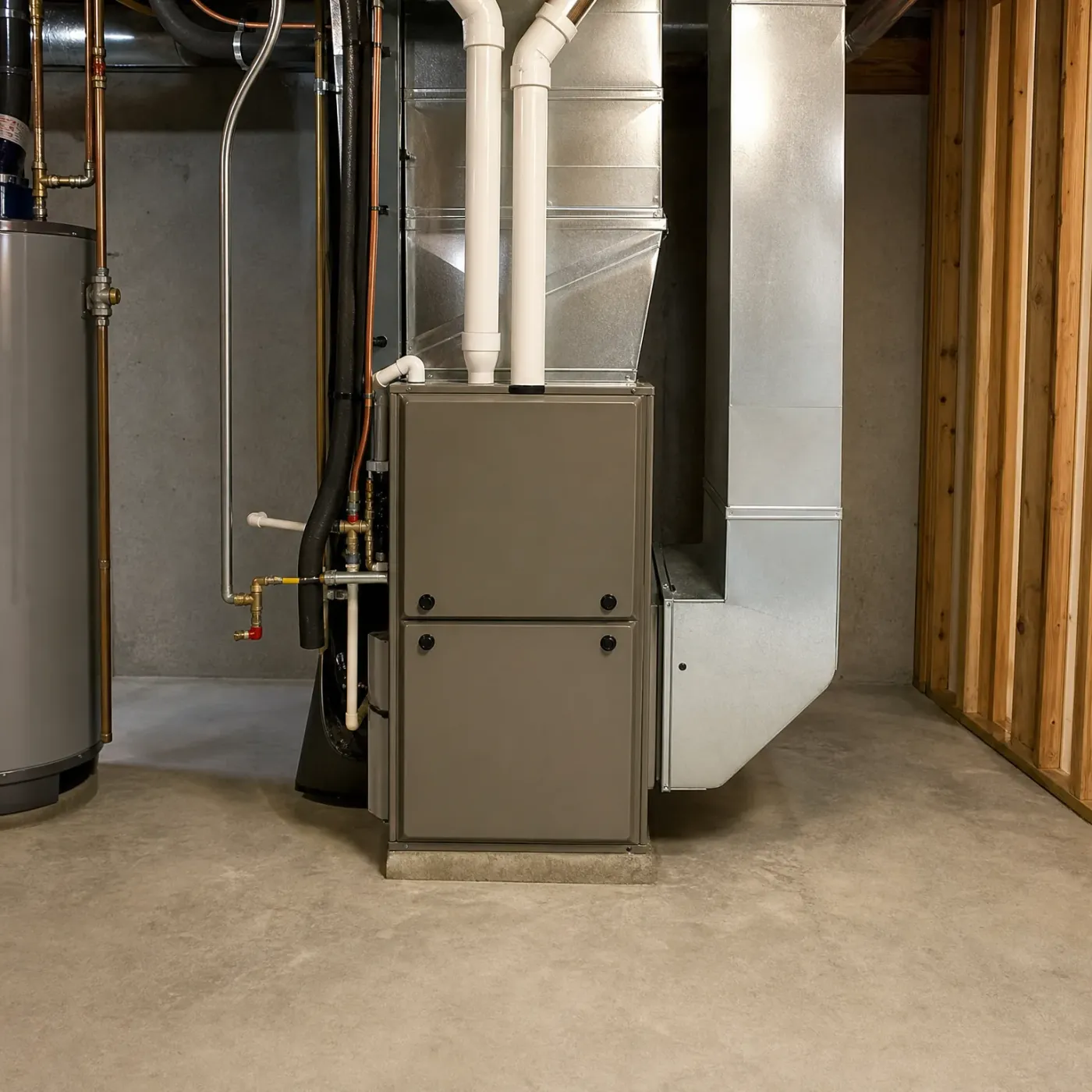
A gray high-efficiency furnace in a basement with PVC vent pipes, sheet-metal ductwork, copper and insulated pipes, a water heater at left, and an unfinished wood-stud wall at right.
After you get your furnace installation

The right pro for this job

Describe the project once instead of to every installer.

You only hire the pro if you want to.

How a high-efficiency furnace works

  • A high-efficiency furnace uses a second heat exchanger to pull more heat out of the exhaust before it leaves the house.
  • That exhaust runs cool enough to vent through PVC pipe out a side wall instead of a metal flue up through the roof.
  • Because the gas burns more completely, these furnaces condense water out of the exhaust and need a drain line to carry it off.
  • A variable-speed blower motor ramps up and down instead of switching only on or off, so the house holds a steadier temperature.
  • The ignition is electronic, either a hot surface igniter or an intermittent pilot, so there's no standing pilot light burning gas all day.
  • Two heat exchangers and a condensate system mean more parts that can need service than a standard 80 AFUE furnace has.

A standard furnace sends its exhaust straight out through a metal flue while it's still hot, and that heat is gone. A high-efficiency furnace routes the exhaust through a second heat exchanger first, so it gives up more of its heat to the house before it leaves. By the time that exhaust reaches the vent, it's cool enough to run through PVC pipe out a side wall. There's no need for a metal flue through the roof at all, which is why you'll sometimes see these called side-vent furnaces.

Pulling that much heat out of the exhaust has a side effect. The gas burns more completely, and water vapor condenses out of it, the same way a cold glass sweats in summer. That water has to go somewhere, so these furnaces need a condensate drain line running to a floor drain or a pump. It's one more thing that can clog or fail, and one more reason this isn't a swap you want to do yourself.

The blower works differently too. Instead of one speed that's either on or off, a variable-speed motor ramps up gradually and holds a lower speed when the house doesn't need full output. That's part of why temperatures feel steadier room to room. And the ignition is electronic, a hot surface igniter or an intermittent pilot, so nothing sits there burning gas when the furnace isn't running.


A woman in a cream knit sweater sits in an armchair with her eyes closed and a slight smile, beside an open window showing orange autumn foliage, with a mug, books and a lit candle on a small side table.
An older man with gray hair and a beard leans back on a beige sofa with his eyes closed, in a sunlit room with potted plants, a wicker chair and large windows behind him.
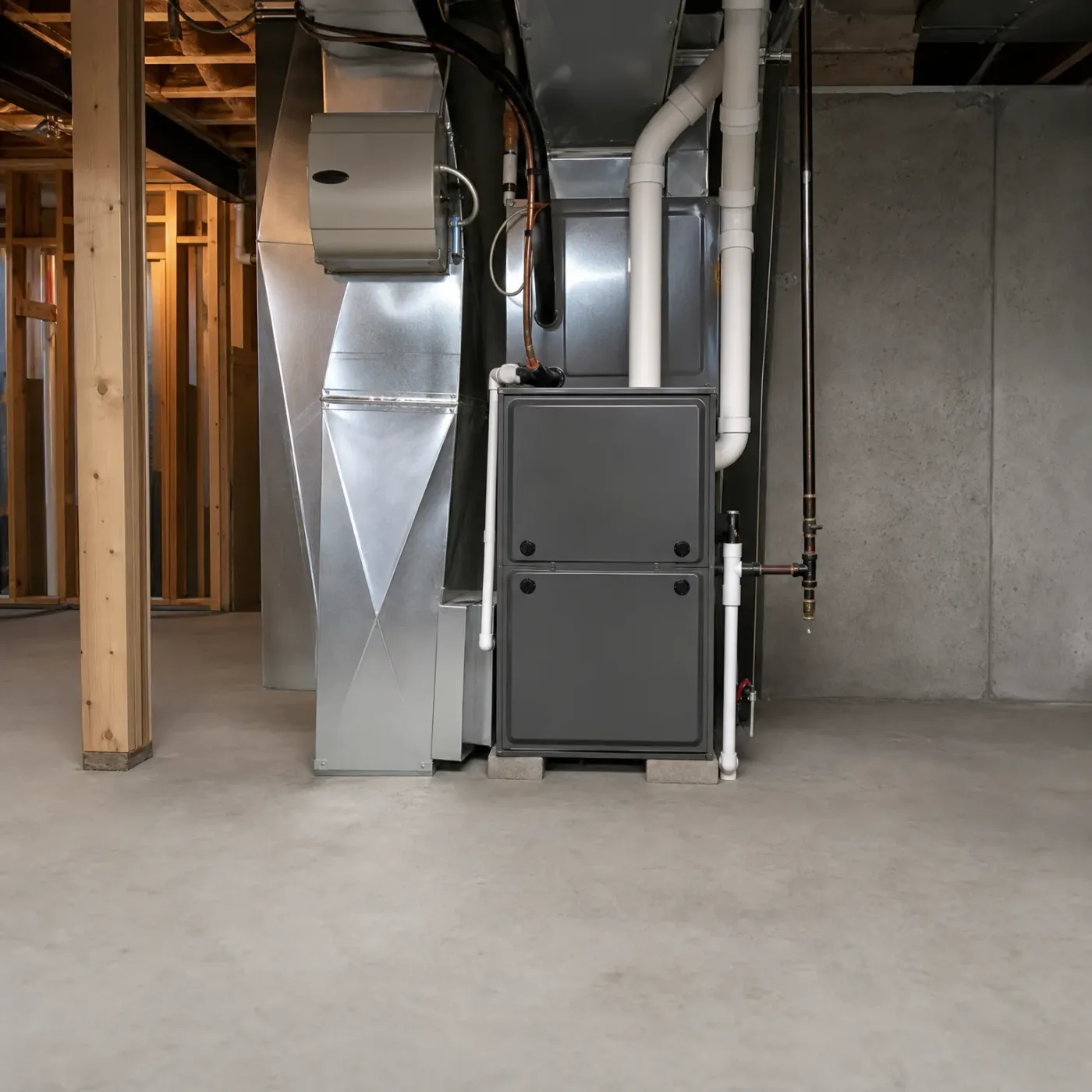
A gray high-efficiency furnace with white PVC venting pipes stands on blocks in a basement next to sheet-metal ductwork, with exposed wood framing on the left and a concrete wall and floor.

A high-efficiency furnace in the basement

PVC pipe for intake and exhaust, run through the wall instead of up a chimney. The second heat exchanger and the condensate line are why. This setup is pulling most of the heat out of the gas before it leaves the house.

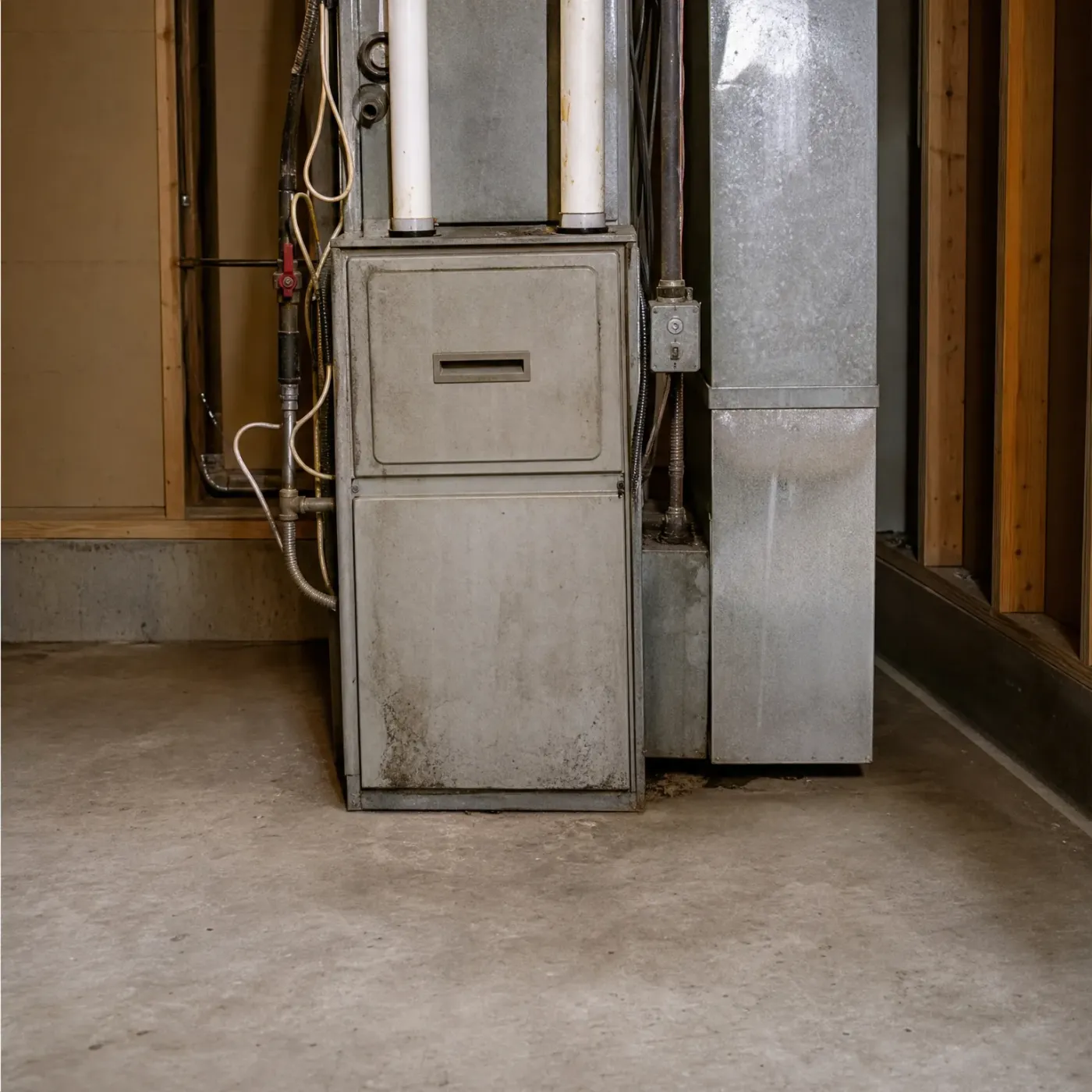
An older gas furnace with two white PVC vent pipes stands on a concrete basement floor beside galvanized sheet-metal ductwork, flexible conduit, and piping along a wall.

An older furnace nearing the end

A metal cabinet, a flexible gas line, no PVC in sight. This furnace vents straight up through a metal flue, which means a lot of that heat goes out the roof instead of into your rooms. It still runs. It's just not keeping much of what you pay for.

Winter nights average 23°F statewide

At 23°F, your furnace is firing most nights from December through February, not just on the cold snaps. A furnace running 80 AFUE is burning a fifth more gas to hold the house at temperature than a 95 AFUE model would, night after night.

NOAA nClimDiv 1991-2020 county normals weighted by homes

A high-efficiency furnace costs more to install than a standard one, and in a Pennsylvania winter that runs from December through February at 23°F most nights, the difference shows up on the gas bill for as long as you own the house. That's the trade. Once you know that, the decision is really about how long you plan to stay and whether you'd rather pay for the efficiency up front or hand 20 cents of every gas dollar to the flue for another fifteen years. Getting to that decision shouldn't mean calling around to three or four contractors, repeating the same description of your old furnace each time, then sitting with quotes that are hard to compare because nobody priced the same thing. You already have the answer to the AFUE question. What's left is getting a straight number from someone licensed to install it in your house, without doing that legwork yourself.

Corner of a house with light horizontal lap siding, a white gutter and downspout, and a window, beside a mulched bed with small shrubs, a lawn, wooden fence and trees in the background.
Close-up of a white gutter along an asphalt-shingle roof edge with dry brown leaves collected in it, a downspout and lap siding below, and blurred autumn trees in the background.
Exterior corner of a house with horizontal lap siding above a stone veneer base and a dark-framed window, with ornamental grasses and shrubs in the foreground and trees in low sunlight behind.
A white horizontal-siding house with a steep gray shingled gable roof, fronted by trimmed shrubs, a brick walkway, and a lawn scattered with fallen autumn leaves.
Corner of a house with cream horizontal lap siding, a black-framed window, asphalt shingle roof with dark fascia, white hydrangea blooms and green shrubs below, and a leafy tree and wood fence to the right.

Matched to your furnace job

Skip collecting and comparing quotes for the new furnace.

Match me with a pro

Asking costs nothing, and the choice to hire stays yours.