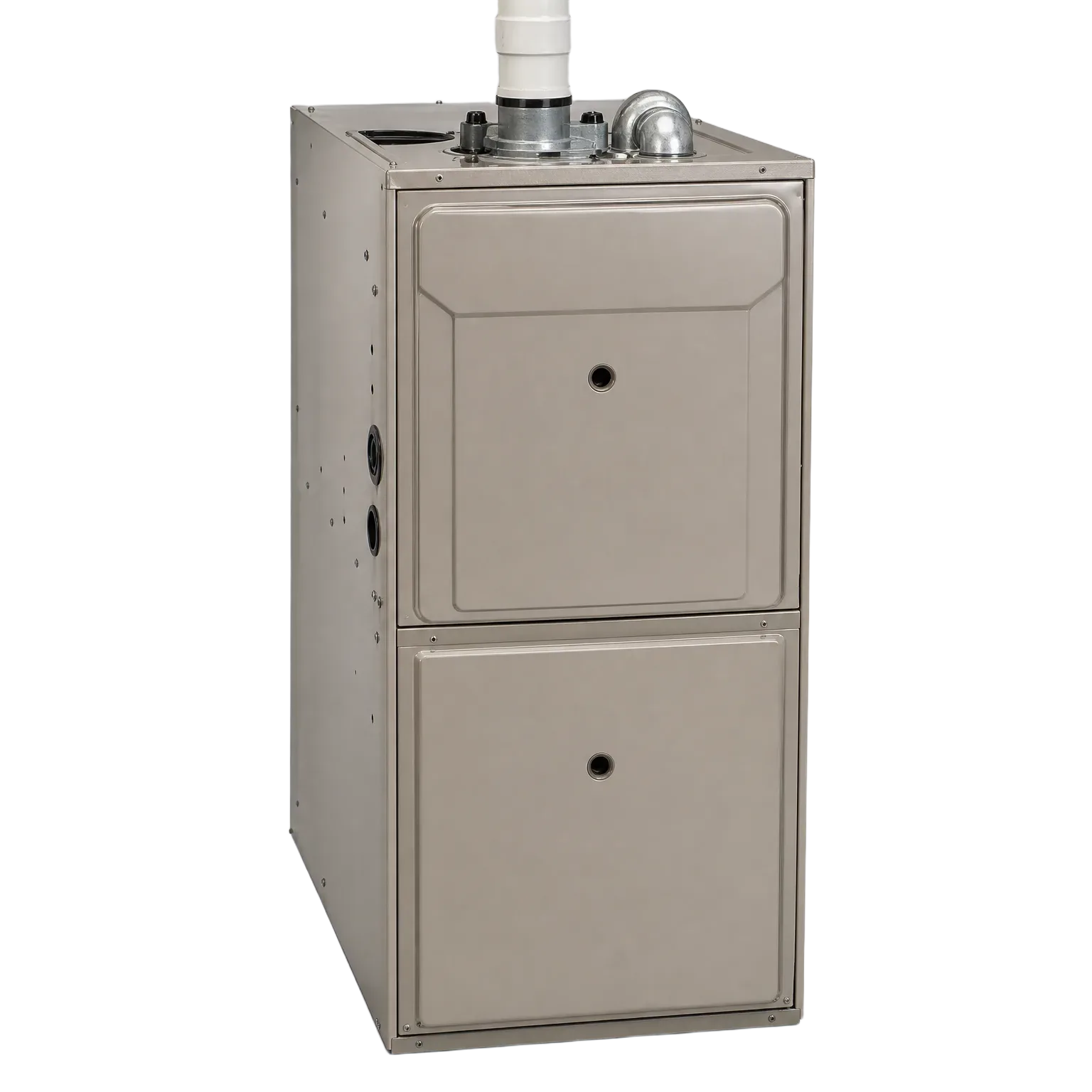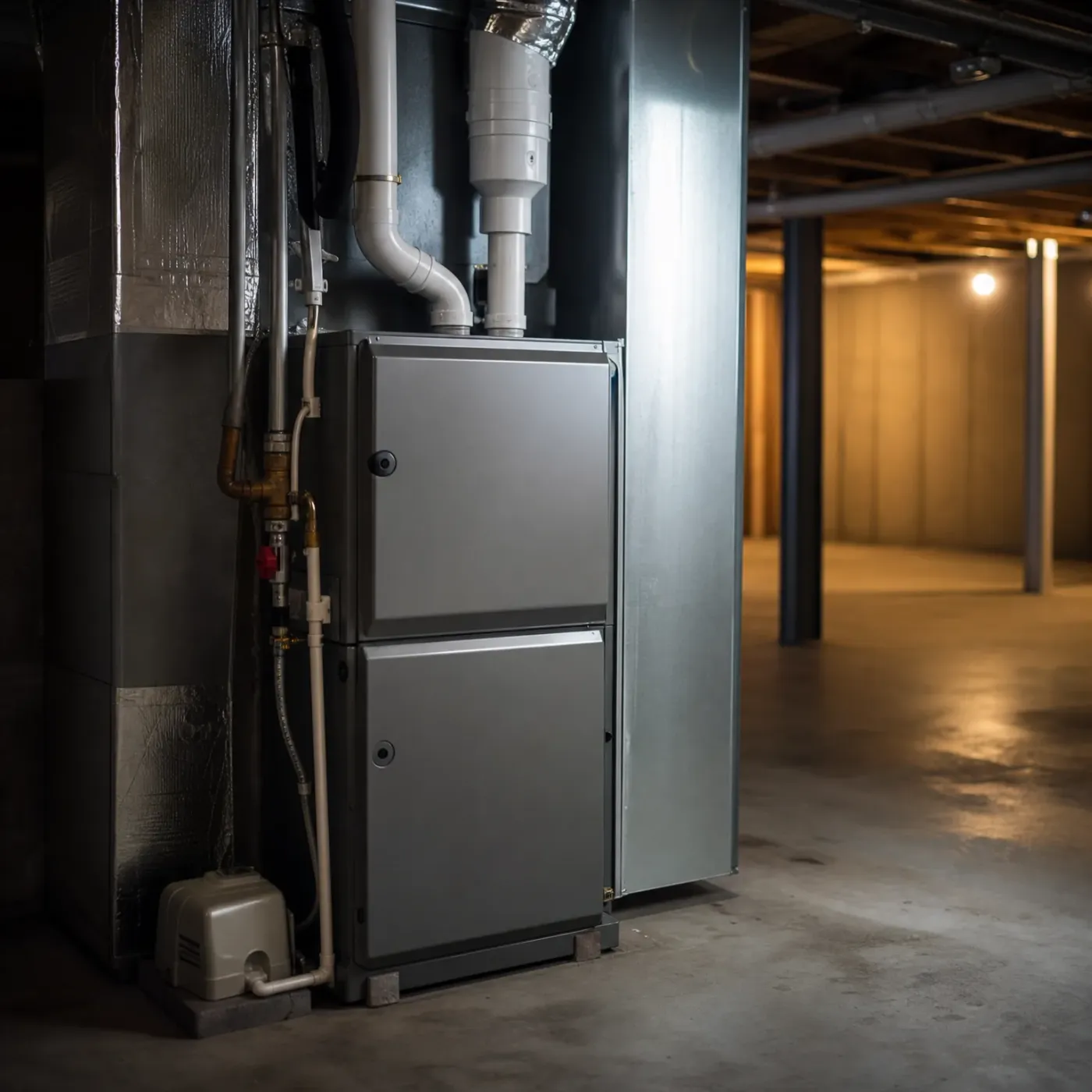
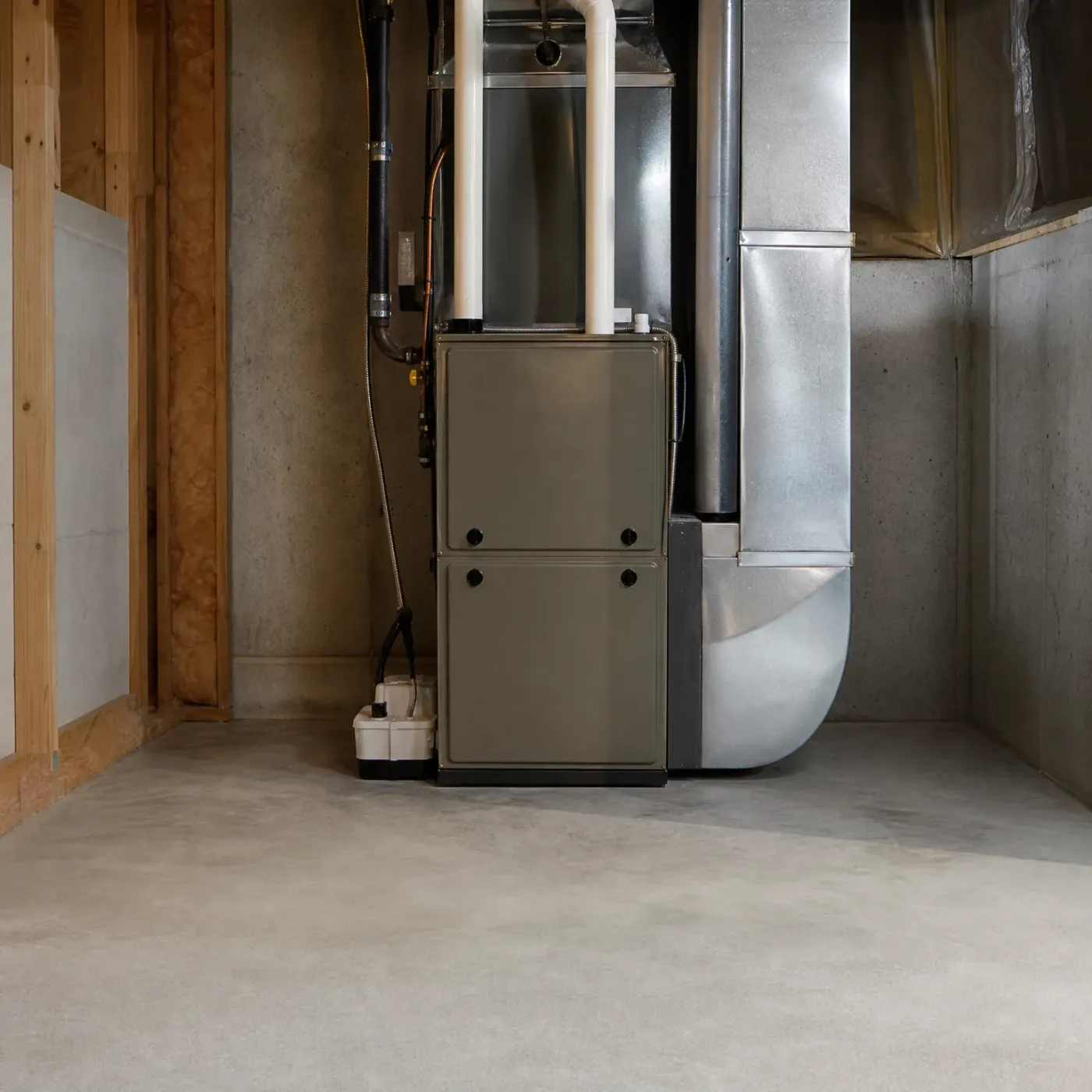
A gray high-efficiency furnace with PVC venting, copper and plastic piping, and a condensate pump sits beside sheet-metal ductwork in a concrete-floored basement.

A local pro for your furnace installation

Repair or replace an aging furnace in Pennsylvania

A furnace that's struggling, getting old, or running up your gas bill leaves you weighing two options: fix what's wrong or put in a new one. That choice depends on the age of your system, what's failing, and what it would cost to keep patching it versus replacing it outright. Answer that, and instead of calling around Pennsylvania for quotes, a contractor who knows gas furnaces reaches out to you directly.

Get matched

A furnace worth repairing is usually under 15 years old with one part failing, not several. Past that age, most Pennsylvania homeowners find the repairs keep coming, because the heat exchanger and blower motor wear out together once a gas furnace gets that old. If your furnace is in that range and still runs most nights without trouble, a repair makes sense. If it's older, or you've had more than one breakdown this winter, replacing it stops the pattern of paying to fix something that's going to fail again in a different spot next month. The gas furnaces common here can run fine for years past their expected life, right up until the heat exchanger cracks, which is a safety issue, not just an inconvenience. Either path starts with someone looking at your specific unit, because the right call depends on what's actually wrong with it, not just its age.

A gray high-efficiency furnace with white PVC vent pipes stands against a concrete basement wall beside sheet-metal ductwork, a small condensate pump on the floor, and exposed wood framing at left.
A furnace still under warranty with one part out, like an igniter or a flame sensor, is worth fixing and keeps running the rest of the winter.
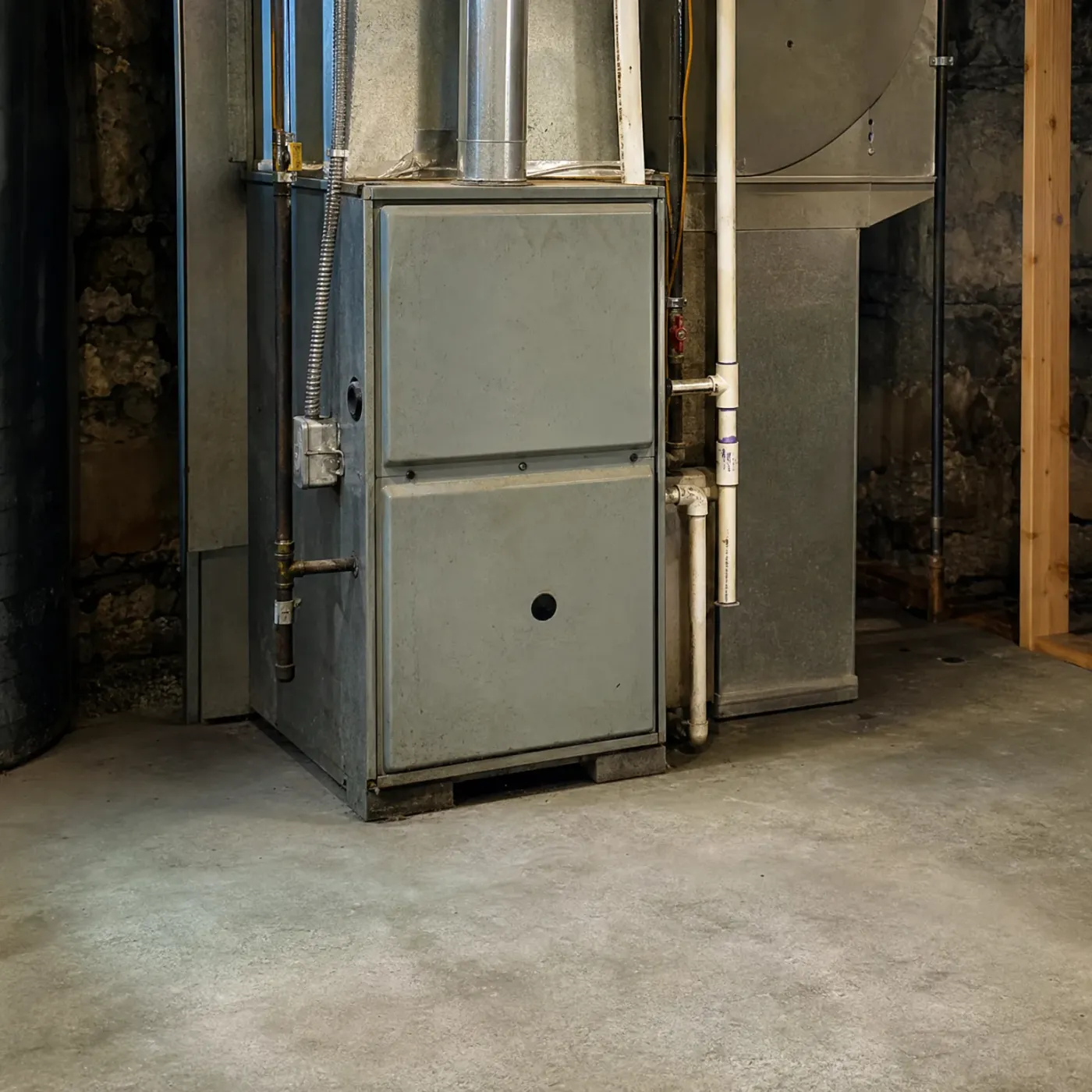
A gray sheet-metal furnace with flue pipe and adjacent ductwork stands against a stone basement wall on a concrete floor, with white PVC and metal pipes running nearby.
A furnace with a cracked heat exchanger or a blower motor on its way out, in a basement this old, is done patching and ready to be replaced.

Every heating cycle starts the same way. An igniter sparks, gas flows, and a flame sensor has to confirm there's real fire before the control board lets the gas valve stay open. Miss that proof and the valve shuts, then the furnace tries again. Once it's burning, the heat exchanger is doing the real work, keeping the flame and combustion gas on one side while a blower pushes your house air across the other. That separation is the whole point of the part. A crack in it means the two sides aren't separate anymore, which is why that failure gets a furnace replaced instead of repaired. The blower motor and burner assembly run every cycle, all winter, for years, so they tend to wear out close together rather than one outlasting the other by much. The AFUE number on the unit tells you what share of the gas you're paying for turns into heat in your house, and what share just goes out the flue.

How a gas furnace actually runs

  • A gas furnace lights by sparking an igniter, which then has to prove flame to a sensor before the gas valve stays open.
  • If the flame sensor doesn't detect fire within a few seconds, the control board shuts the gas valve again, and the furnace tries once more.
  • The heat exchanger is the metal chamber that keeps burning gas separate from the air blown through your ducts and into your rooms.
  • A crack in that exchanger lets combustion gas mix with the air a blower motor pushes through your house, which is why a cracked one means replacement, not a patch.
  • The blower motor and the burner assembly are built to wear out around the same time, since both run every heating cycle for years.
  • A furnace's AFUE rating tells you how much of the gas it burns turns into heat instead of going out the flue.
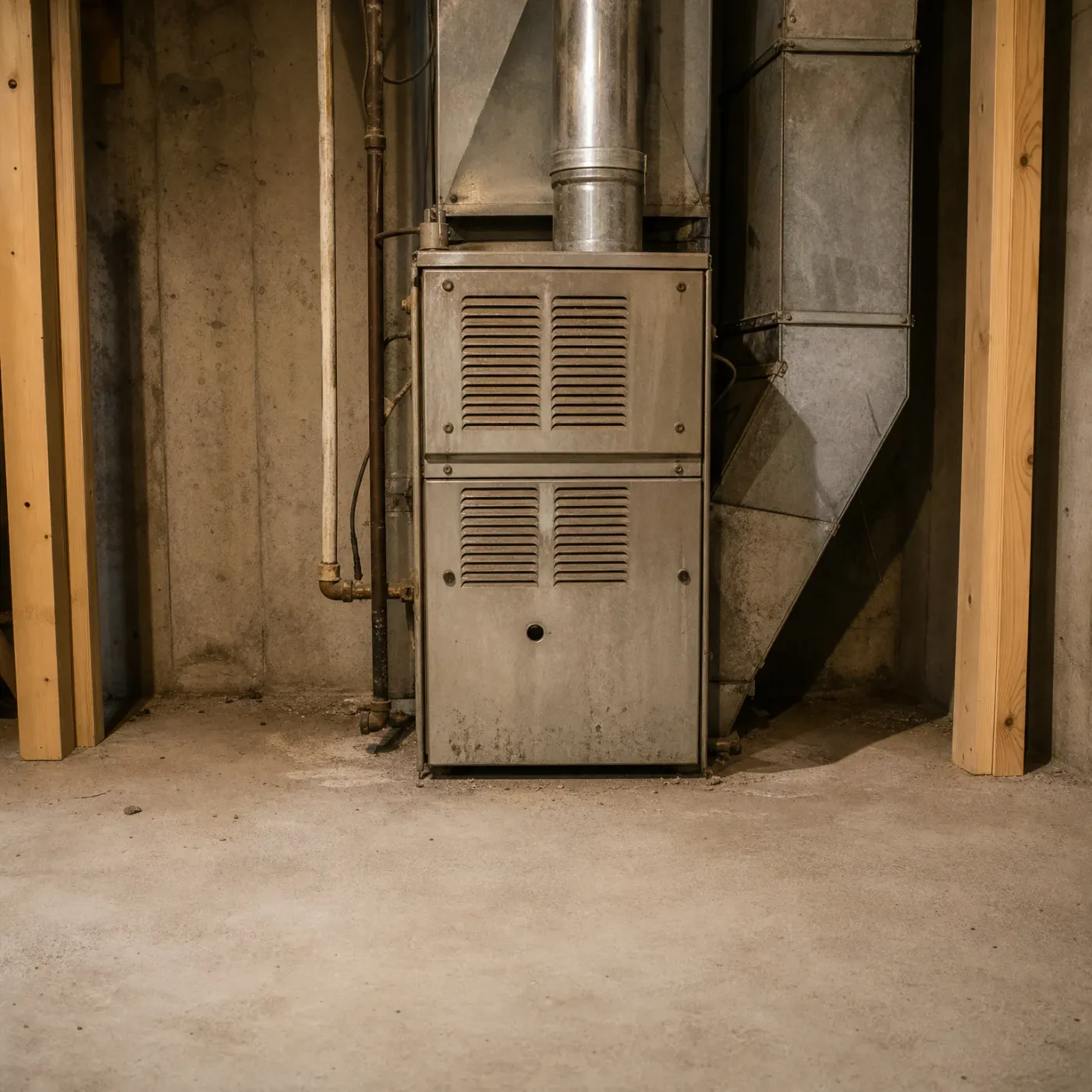
A metal furnace with louvered panels stands against a concrete basement wall, connected to sheet-metal ductwork and a round flue pipe, with wooden framing posts and a pipe nearby.
Before you get your furnace installation
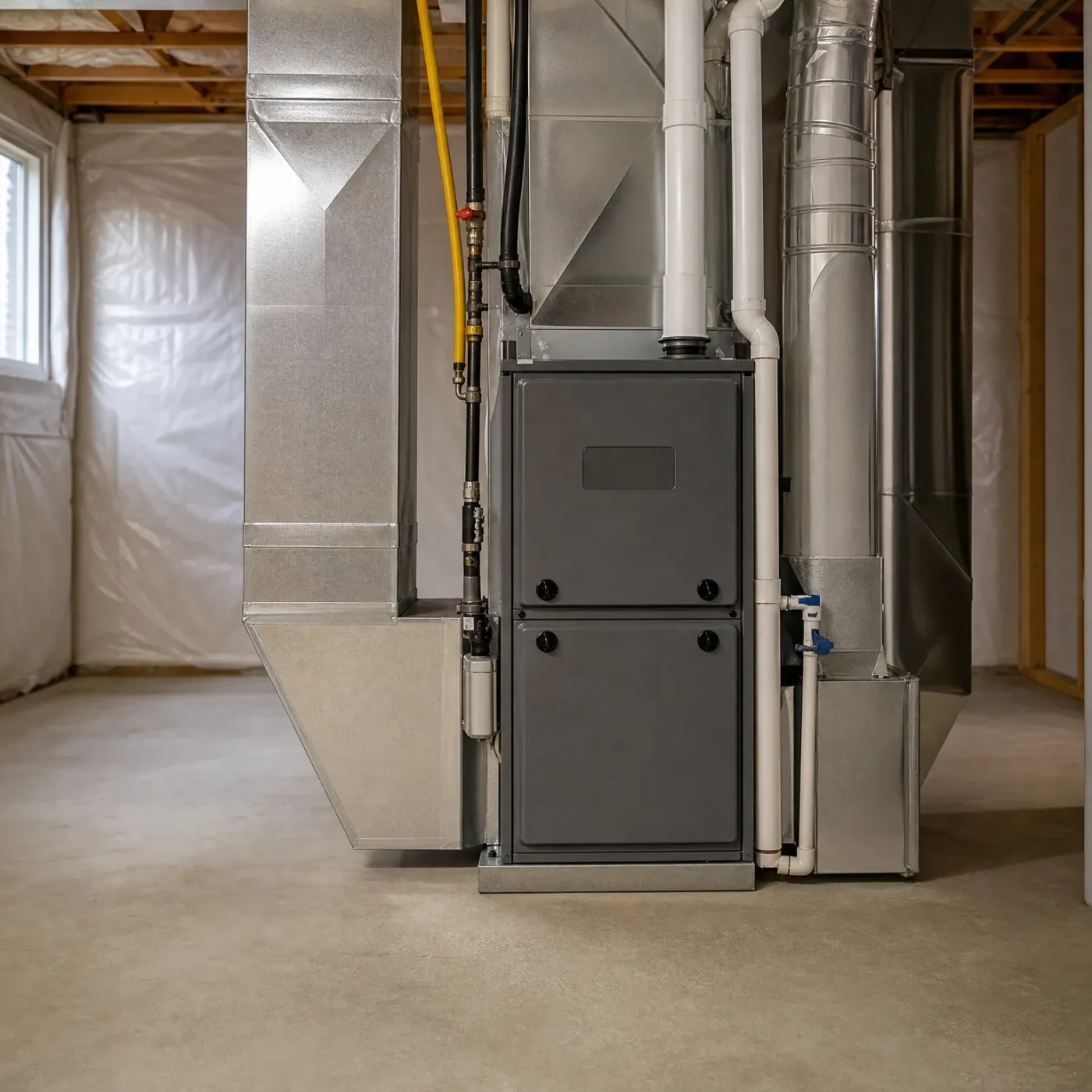
A gray gas furnace stands on a concrete basement floor, connected to sheet-metal ductwork, white PVC vent pipes, and a yellow gas line, with plastic sheeting covering the walls.
After you get your furnace installation

What a repair buys you

A new igniter or flame sensor costs a fraction of a new furnace, and it can keep an otherwise sound system running for another winter or two. If the heat exchanger is clean and the blower motor still pulls its full load, there's no reason to replace parts that aren't failing. Pennsylvania winters are long enough that a furnace needs to hold up through February and March, not just start up in October. A single-part fix on a furnace under 15 years old usually does that, and it buys time to plan a replacement on your own schedule instead of in the middle of a cold snap.

What replacement changes

A new furnace comes with a warranty on every part, not just the one that failed last time. That matters in Pennsylvania, where gas heat runs for months and a breakdown in January isn't a minor inconvenience. Newer furnaces also tend to hold a higher AFUE rating, so less of the gas you pay for goes up the flue. With power this expensive statewide, that efficiency gain shows up on the bill over the following winters. Replacement also resets the clock on the heat exchanger and blower motor, the two parts most likely to fail together once a furnace passes 15 years.

Winter nights average 23°F statewide

With nights averaging 23°F across the state in December, January and February, your furnace is running long stretches to hold a steady temperature, not just kicking on now and then. A furnace near the end of its life has to work harder on those cold nights, which is when a weak part finally gives out.

NOAA nClimDiv 1991-2020 county normals weighted by homes

What an aging furnace costs you

  • A furnace that short-cycles on a 23-degree night can leave upstairs bedrooms noticeably colder than the thermostat reading.
  • Every repair call adds up against the cost of a new system, and parts for an older furnace can take longer to track down.
  • A cracked heat exchanger can leak combustion gas into the house, which is why a failed one usually ends the repair conversation.
  • Gas furnaces that keep misfiring on ignition run up your gas bill even on the nights they do stay lit.
  • A furnace that quits in January means space heaters and an electric bill that reflects Pennsylvania's rates, until it's fixed.
  • Waiting until the furnace fails completely can mean choosing a replacement in a hurry instead of on your own schedule.

An old furnace doesn't just fail one day with no warning. It tells you first, through colder rooms, higher bills, and more trips out to the basement to see why it's making a new noise. Upstairs bedrooms are usually the first place you'd notice, since a furnace that's struggling to keep up loses ground furthest from the unit. That shows up on a night in the 20s before it shows up anywhere else in the house. The gas bill moves too. A furnace that misfires on ignition and has to retry before it lights is burning gas on every one of those failed attempts, not just the ones that catch. None of that fixes itself by waiting. Parts get harder to find as a furnace gets older, and each service call is its own cost stacked on top of whatever comes next. If the heat exchanger goes, there's no more weighing options, because a cracked one can put combustion gas into the house and that ends the conversation about repair. The homeowners who end up happiest with the outcome are usually the ones who looked at replacement before the furnace forced the issue, not after it quit in January with the temperature outside in single digits and a space heater doing the job a gas furnace should be doing, on an electric bill that will show it.

An older woman with gray hair in a gray knit sweater sits on a sofa under a knitted blanket beside a large window, looking out toward yellow autumn foliage, with a living room, fireplace and patterned rug behind her.
An older woman with gray hair in a cowl-neck sweater sits on a sofa under a blanket, looking out a large window toward trees with yellow autumn foliage.
A gray-haired woman in a light knit sweater sits in an armchair by a window, looking out at trees with yellow autumn leaves, with a dark ceramic mug on the sill and a plant in the foreground.
A gray-haired woman in a cream knit sweater sits in a chair by a large window, looking out at rolling hills covered in autumn-colored trees.

Get the right pro for your furnace

Skip the round of in-home estimates for a new furnace.

No charge to send it. You decide if you hire them.

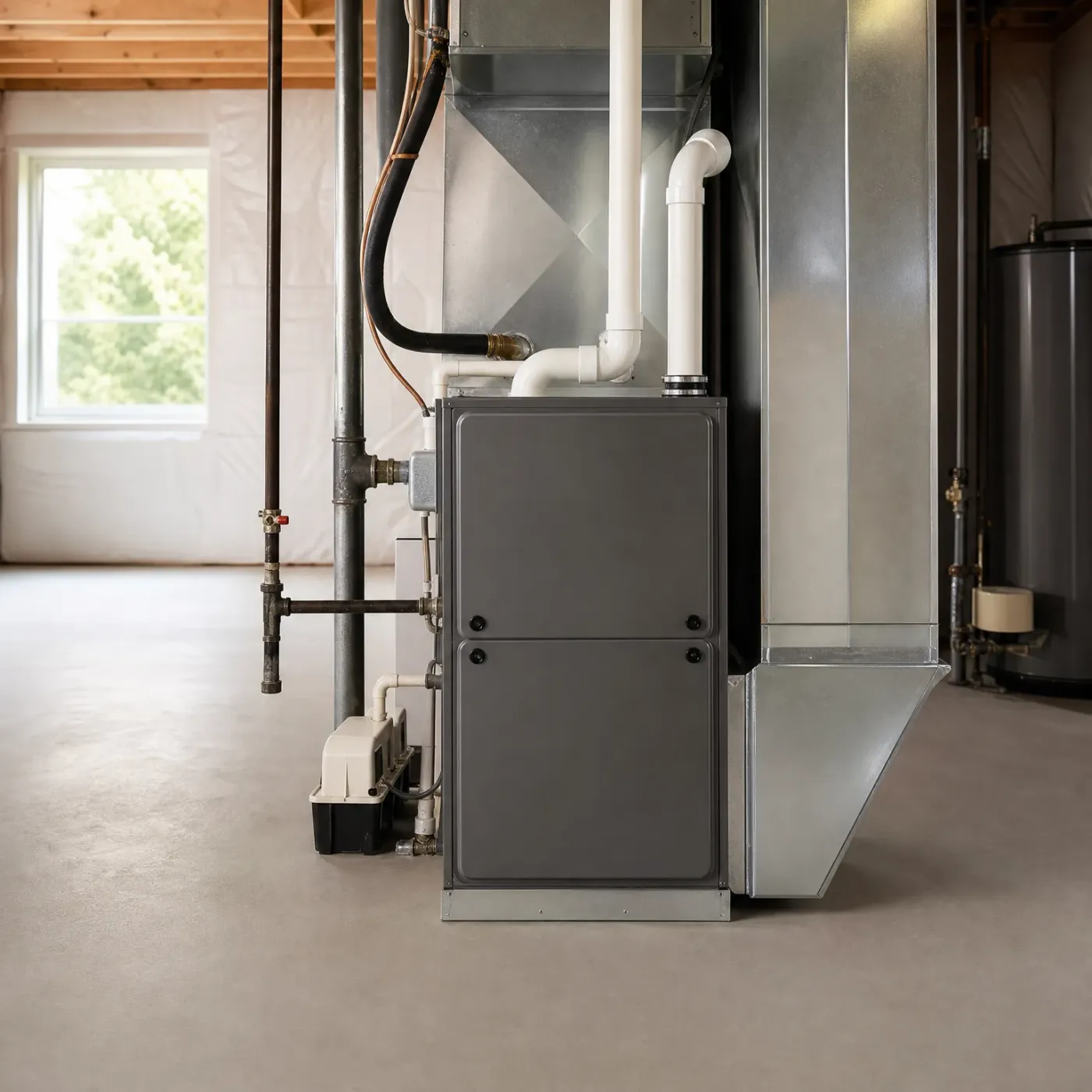
A gray high-efficiency furnace in a basement with sheet-metal ductwork, white PVC vent pipes, metal plumbing lines, a condensate pump on the floor, and a window showing green trees outside.

A furnace running the way it should

This is what a sound setup looks like: clean ductwork overhead, tight gas lines, a condensate pump doing its job. Nothing here is straining. A furnace in this shape earns its keep through another Pennsylvania winter.

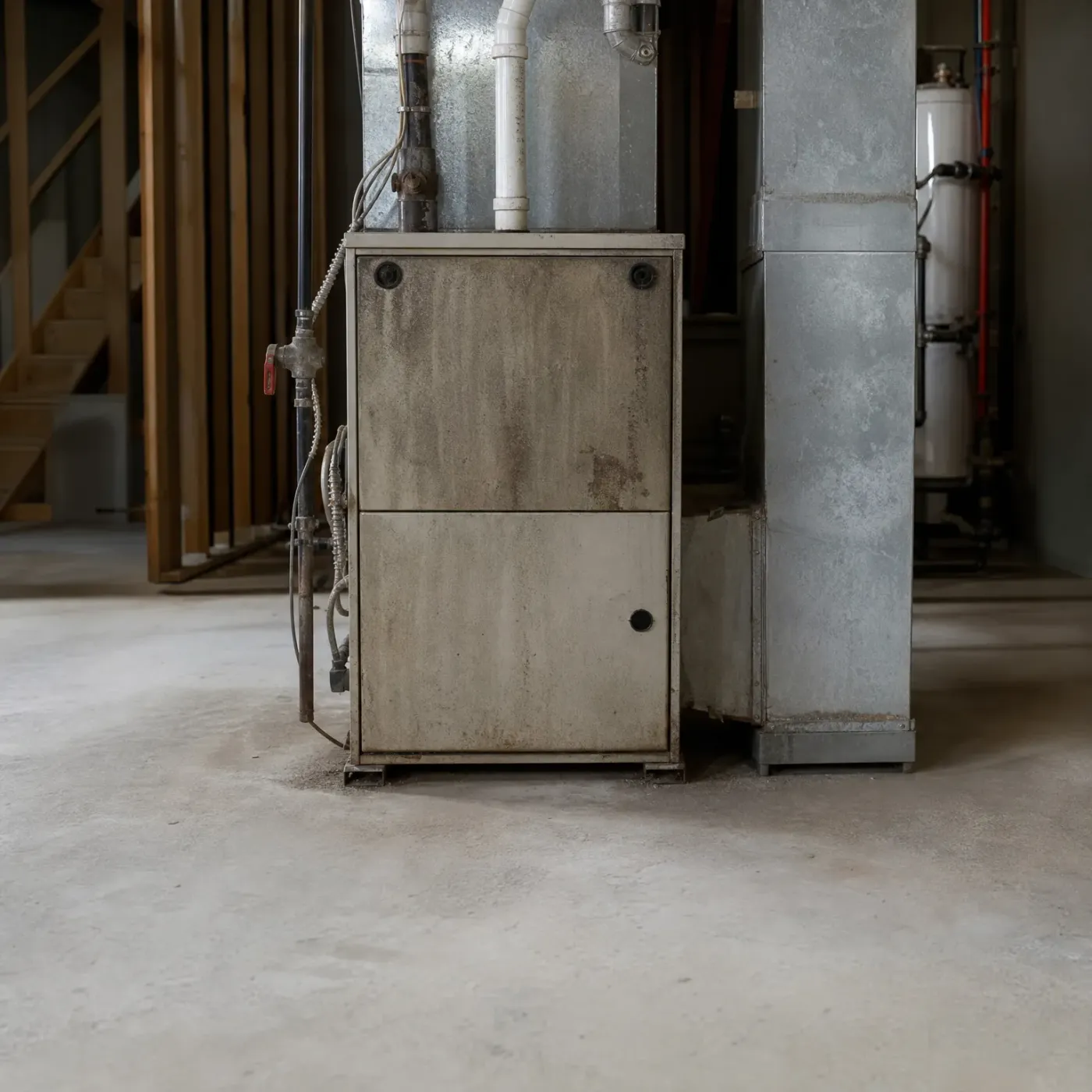
An older metal furnace with PVC and metal pipes stands on a concrete basement floor beside galvanized ductwork, with wooden stairs and a water tank in the background.

A furnace on borrowed time

Dust built up like this on the cabinet usually means years of heat cycles behind it. Next to an aging water heater, in a basement this unfinished, a furnace this old is working harder each winter than it did the one before.

How does a furnace know when to stop running on a cracked heat exchanger before it becomes dangerous?

You've heard a cracked heat exchanger is dangerous, and you want to know what actually stops it from pumping carbon monoxide into your house before someone notices. It's a fair question. A furnace doesn't know a crack has formed, and it isn't checking for one. What it's watching is something else entirely, and that's worth understanding before you decide whether a repair call is enough or the whole unit needs to come out.

It doesn't detect the crack. It detects a limit switch tripping.

A furnace has a high limit switch mounted near the heat exchanger that shuts the gas valve off if the plenum gets too hot. A cracked exchanger can let combustion gases leak into the airflow and throw off that temperature reading, which sometimes trips the switch and shuts the burner down mid-cycle. But plenty of cracks never get hot enough to trip anything. The switch was built to stop overheating, not to catch a crack. That's why a cracked heat exchanger usually turns up during a technician's inspection, with a camera or a combustion analyzer, not because the furnace shut itself off. If yours short-cycles for no clear reason, that's worth having looked at.

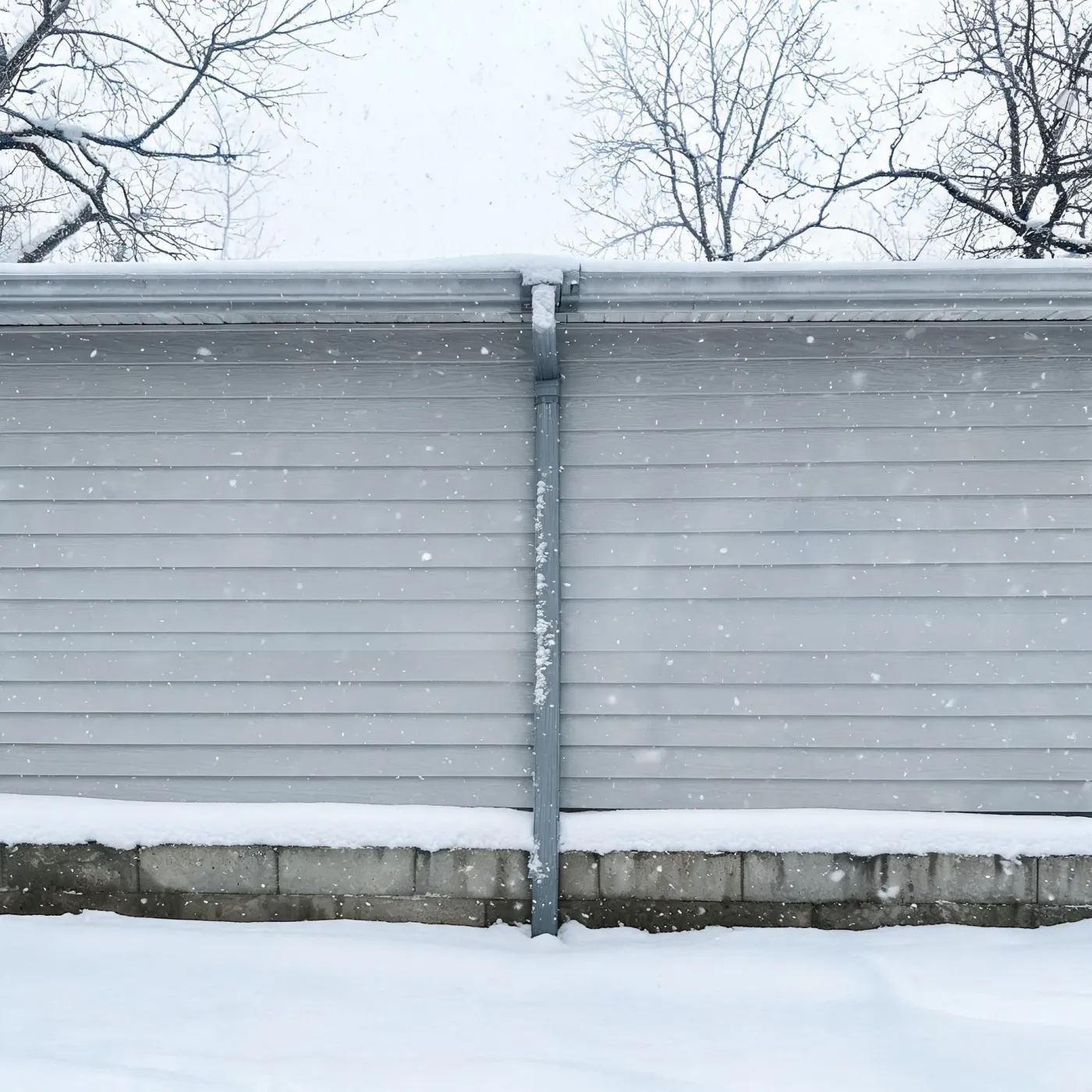
Exterior wall of a building with gray horizontal siding, a metal downspout at center, and a concrete block foundation, with snow on the roof edge, ledge, and ground, and bare trees against an overcast sky during falling snow.

The National Weather Service puts the statewide average winter night at 23°F. A furnace that's already struggling doesn't just run longer on a night that cold, it cycles more, trying to recover ground it keeps losing. That's where you'll notice an aging blower motor or a failing igniter first, usually around 2 or 3 in the morning when the house can't hold its temperature and the thermostat calls for heat again before the last cycle even finished. On a newer system this isn't a strain. On one that's already on its way out, these are the nights that finish it off.

NOAA nClimDiv 1991-2020 county normals weighted by homes

What are you noticing about your furnace right now

Maybe one room never gets warm no matter where the thermostat sits. Maybe the furnace runs longer than it used to, or kicks on and off more than it should on a cold night. You might hear a bang when it starts, or a rattle from the blower, or notice a burnt dust smell the first few times it fires up each season. Some homeowners catch a yellow flicker on the burner flame instead of blue, or see soot around the access panel. Your gas bill might be climbing even though you haven't changed the thermostat. Any one of these on its own could be minor. Together, or ignored long enough, they point to a furnace that's wearing out from the inside, and a cracked heat exchanger left unchecked can put carbon monoxide into the house.

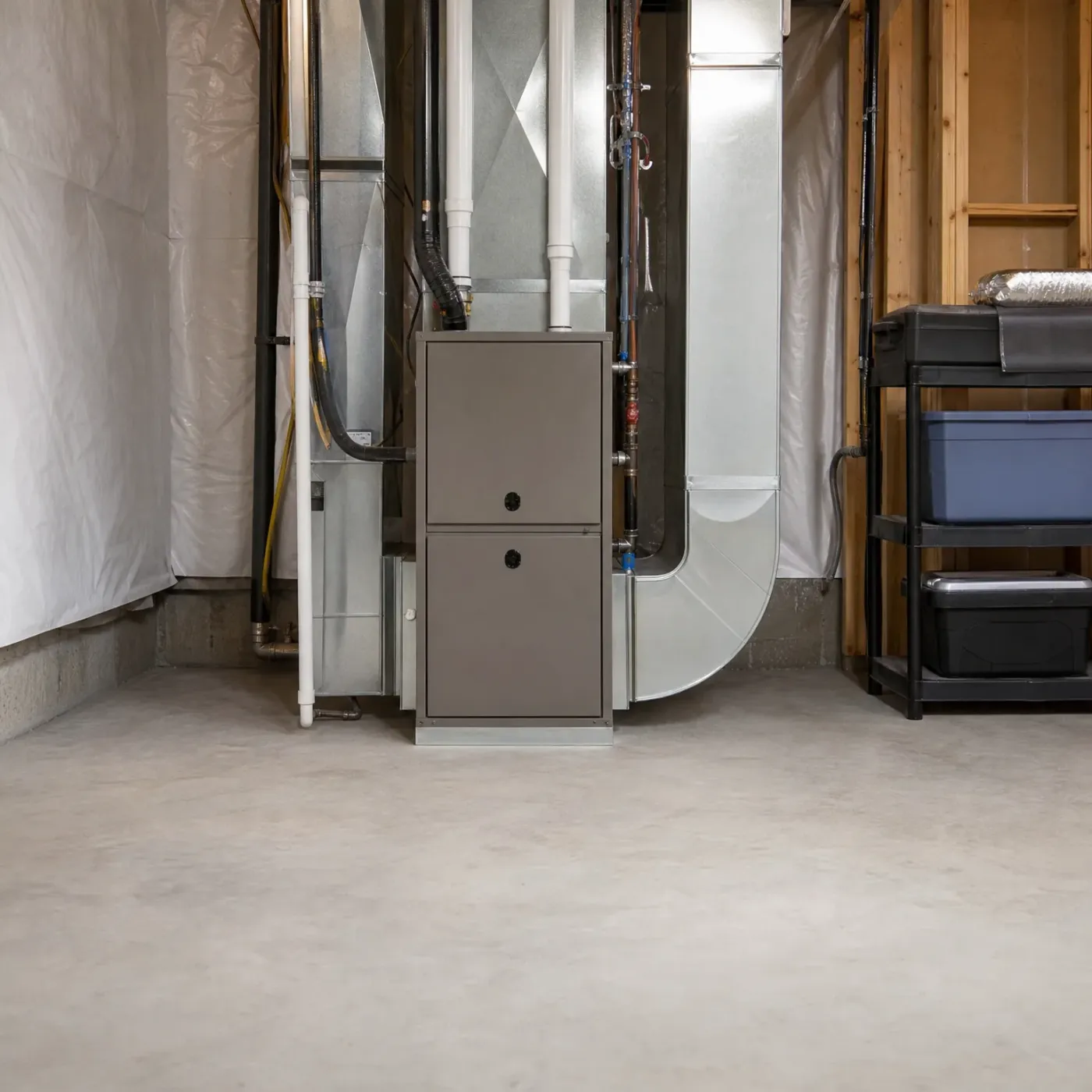
A basement utility area with a gray furnace, sheet-metal ductwork, pipes, plastic-covered walls, a concrete floor, and a black shelving unit holding storage bins.

Furnace holding steady

This is a setup with no strain on it. The ductwork overhead is tight, the gas line runs clean to the cabinet, and the condensate line drains the way it should. A furnace in this shape isn't fighting itself on a cold night, it's just running.

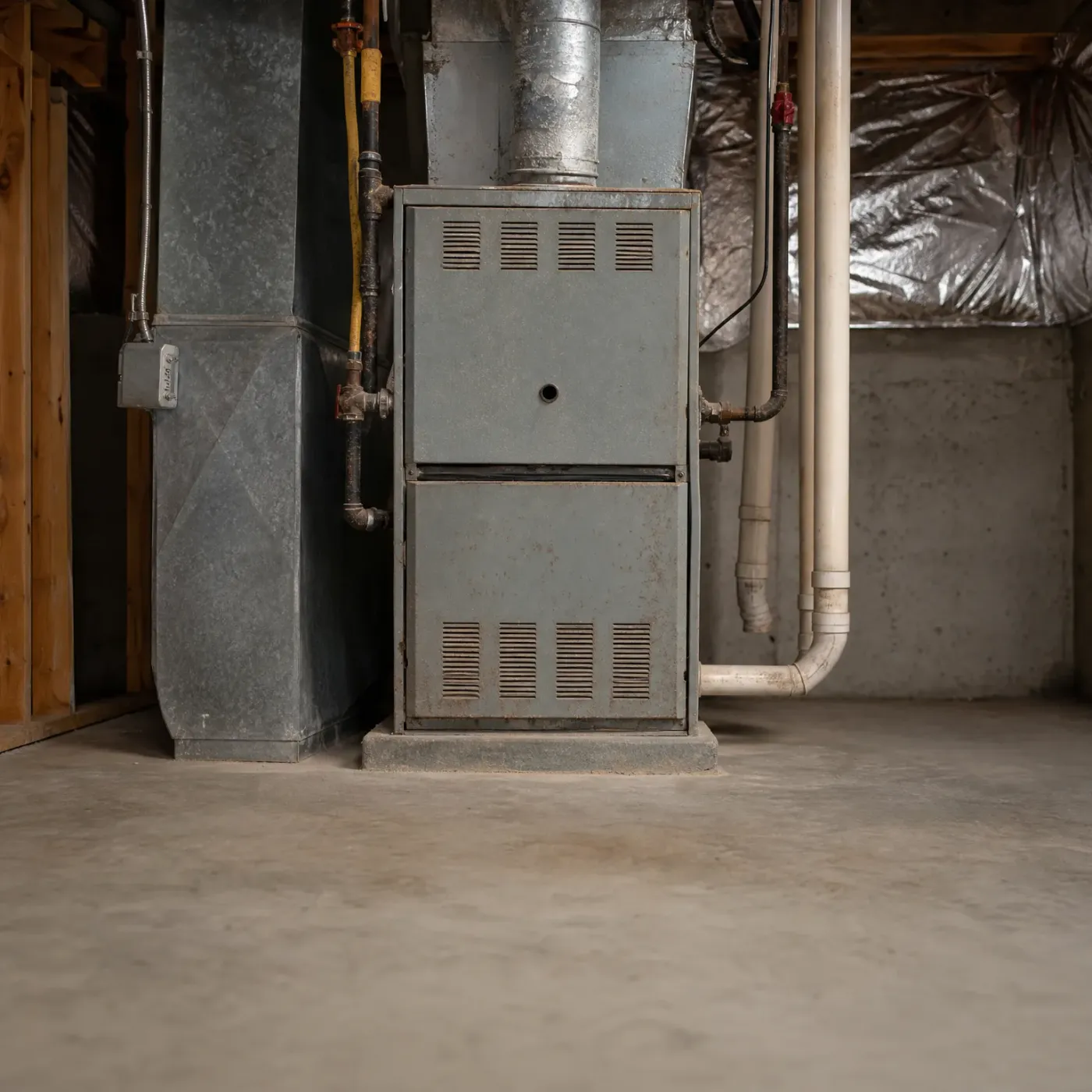
A gray metal furnace with louvered vent panels stands on a concrete basement floor beside galvanized ductwork, gas and plastic pipes, and foil-faced insulation along the ceiling and wall.

Furnace past its years

Rust on the cabinet outside usually means wear you can't see inside it. Paired with galvanized duct runs and a furnace this old, the question isn't whether something fails next, it's which part goes first. Patching it again just buys a little time.

A woman stands in the open black front door of a white-sided house with a dark shingled roof while a man in a navy jacket approaches along the walkway, with lantern wall lights, a potted shrub, and flowering garden beds nearby.

Fix it or replace it, the answer is in what's failing

A furnace with one part gone and a clean bill otherwise is worth repairing. A furnace with a cracked heat exchanger, or a blower motor and heat exchanger both wearing out at once, is done. That's the whole decision. Everything else is detail around it.

You don't have to sort that out on your own at ten at night with the thermostat set to 68 and the house not holding it. Getting matched with a contractor means you skip the part where you call around, describe the banging noise three different times, and wait on quotes to see who even answers. You explain it once, to someone who shows up knowing furnaces and knowing winters here, and they take it from there.

A wooden table holding a stone vase with a bare branch, two stacked books and a small dark bowl, beside a window with green foliage outside and a sofa in the dim background.
A woman in a cream knit sweater sits in an armchair with her eyes closed near a window showing yellow autumn foliage, with a mug on a round wooden side table beside her.
A gray-haired man with a beard in a blue button-placket shirt reclines on a couch with his eyes closed, beside a sunlit window with a green plant.

Furnace Installation

A pro who works on furnaces

Describe the project once instead of to every installer.

A black-framed smartphone standing upright against a plain white background, its screen filled with solid green.
Step 1 of 3: Equipment