PA Furnace Finder

Signs of a cracked heat exchanger in Pennsylvania

Step 1 of 3: Equipment

What are the signs of a cracked heat exchanger in my furnace?

Your furnace has been running for months to get you through the Pennsylvania winter, and something about it doesn't feel right. Maybe there's a smell, or a sound, or someone in the house has had headaches that come and go. A cracked heat exchanger is a real safety problem, not just a repair issue, so it makes sense to want to know what to look for before calling anyone out.

Soot, a strange smell, or headaches that ease when you leave the house

A cracked heat exchanger lets exhaust leak into the air your furnace blows through the house instead of venting it outside. Watch for soot building up around the furnace cabinet, a smell like formaldehyde when the furnace runs, or a yellow flame instead of a steady blue one at the burner. Some households notice headaches, nausea, or drowsiness that gets better when they're away from home and comes back when they return, since that's carbon monoxide at work. A furnace that clicks on and off more than it used to can also point to this, since the crack opens and closes as the metal heats and cools. Any one of these is reason to shut the furnace off and have it looked at before running it again.

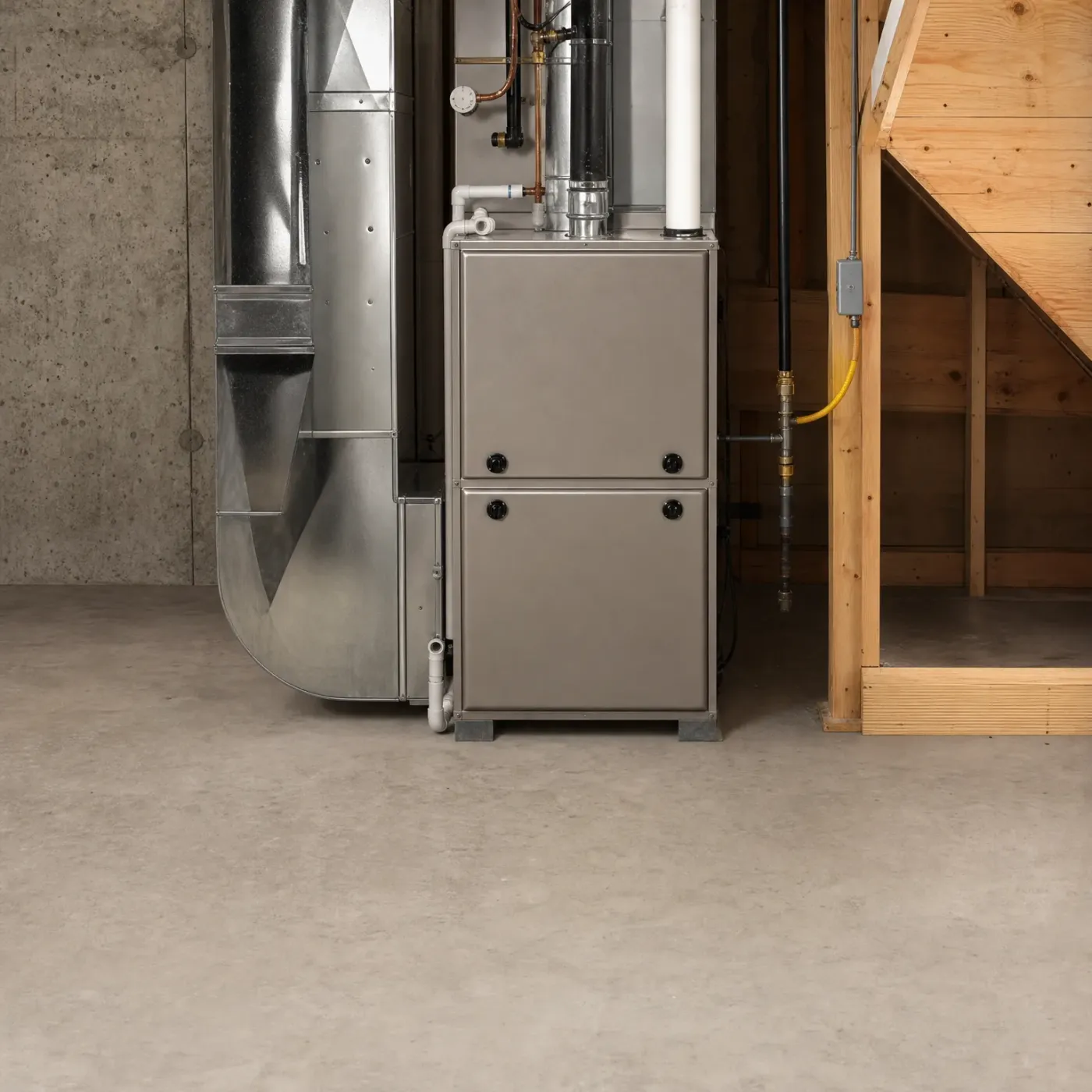
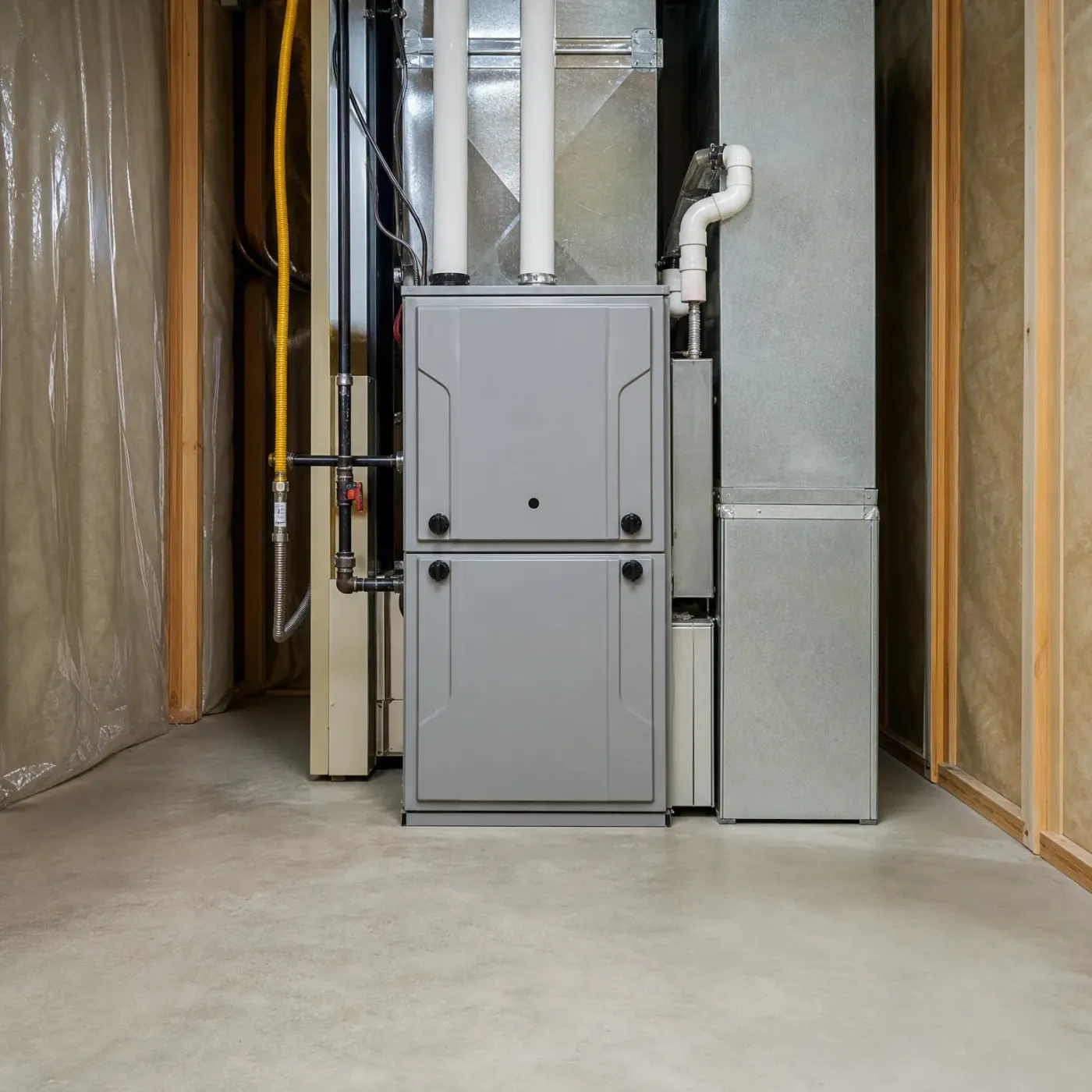
A gray high-efficiency furnace with white PVC vent pipes stands in an unfinished basement beside sheet-metal ductwork, gas piping, and insulated stud walls on a concrete floor.

Running the way it should

The burners light, the blower pushes warm air through the ducts, and the flue carries combustion gases straight out through the PVC pipe. No smell, no soot, no headaches after it's been running a while. This is what a sound heat exchanger looks like doing its job.
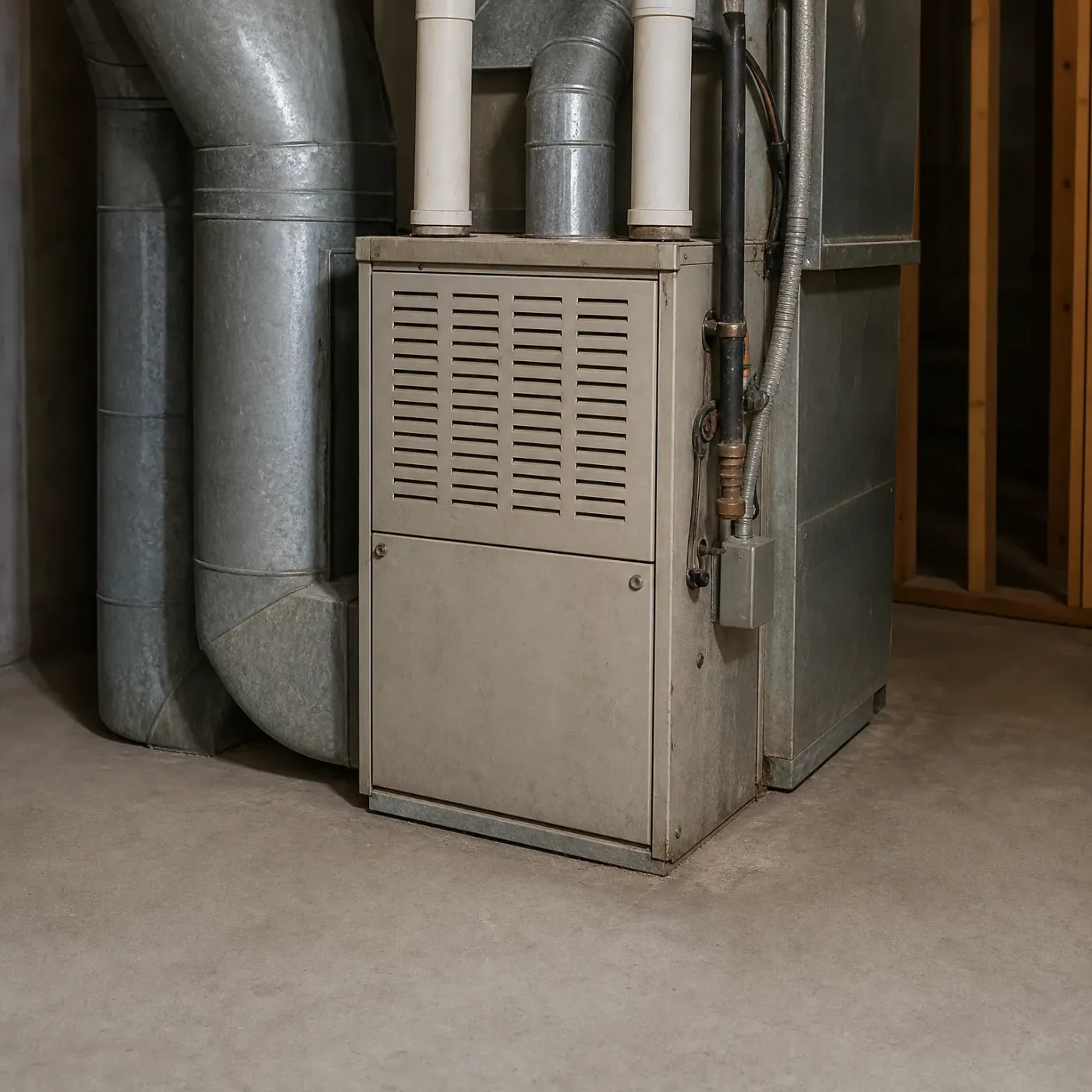
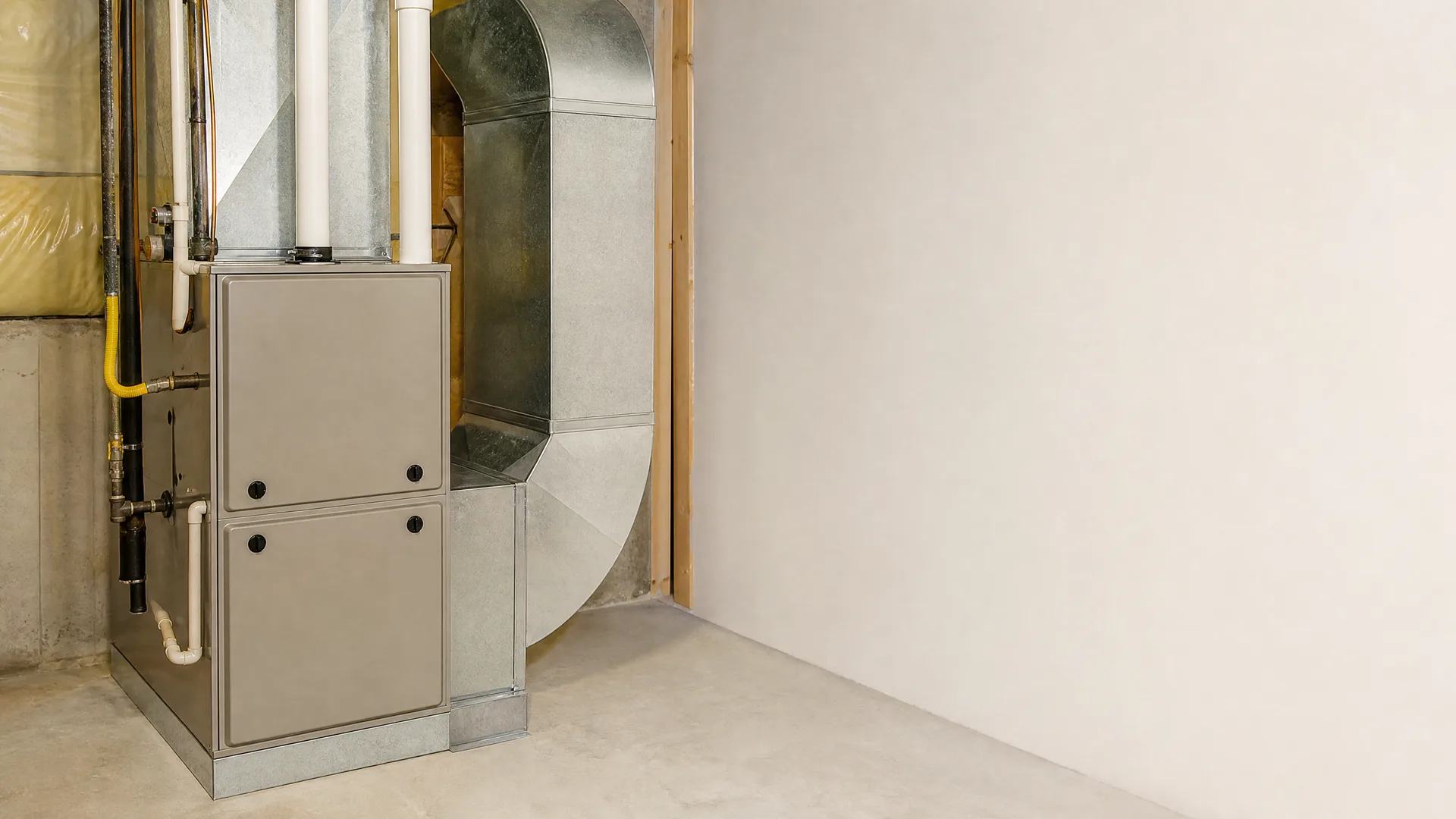
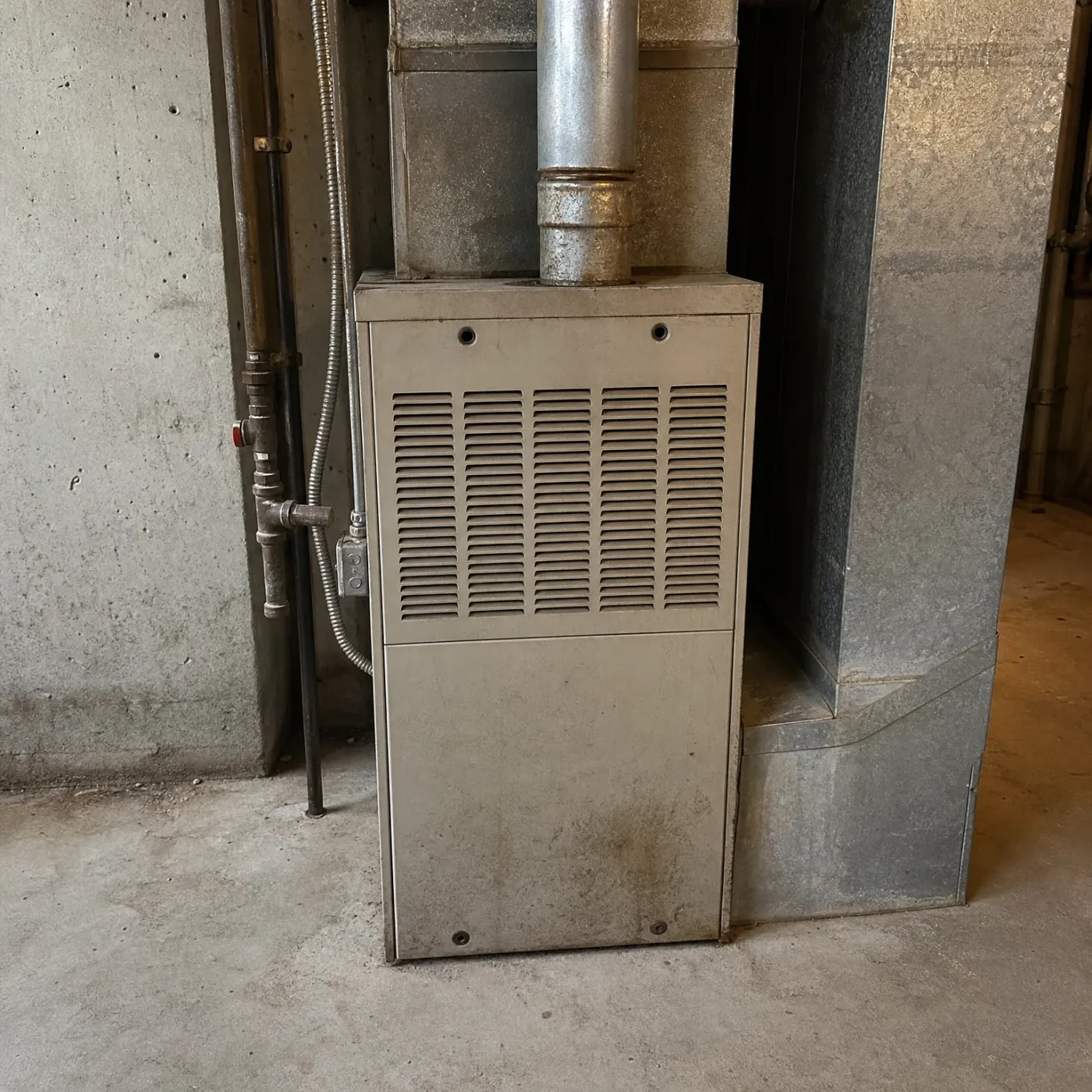
A beige sheet-metal furnace with a louvered upper panel stands on a concrete basement floor, connected to galvanized ductwork, white PVC vent pipes, and a metal gas line with an electrical box.

Something's gone wrong inside

A crack in the heat exchanger lets combustion gases leak into the air your blower moves through the house instead of out the flue. You might notice a sharp or formaldehyde-like smell, soot near the cabinet, or a flame that flickers when the blower kicks on. Anyone in the house getting headaches or feeling sick only when the furnace runs is a sign worth taking seriously.

Keep Running It or Get It Checked

Keep running it

  • A cracked heat exchanger can let carbon monoxide into the air your blower pushes through the house.
  • Carbon monoxide has no smell, so the headaches or nausea someone in the house feels may be the only warning you get.
  • The crack doesn't heal on its own, and each heating cycle flexes the metal around it a little more.
  • Shutting it off and opening windows if you suspect a crack costs you heat for a day, not months.
  • A furnace that's been limping along this way often needs more than one part replaced once a contractor opens it up.

Have it inspected now

  • A licensed contractor can check the exchanger with a camera or combustion analyzer, which tells you for certain instead of guessing from symptoms.
  • If it turns out to be something else, like a dirty burner or a cracked flue pipe, you've still found the actual problem.
  • A contractor who works on furnaces all winter in Pennsylvania has likely seen this exact model and knows where it tends to crack first.
  • Catching it early can mean a repair instead of a full furnace replacement in the middle of a cold stretch.
  • You get one contractor local to you looking at your specific furnace, not a string of calls from companies that don't know your equipment.
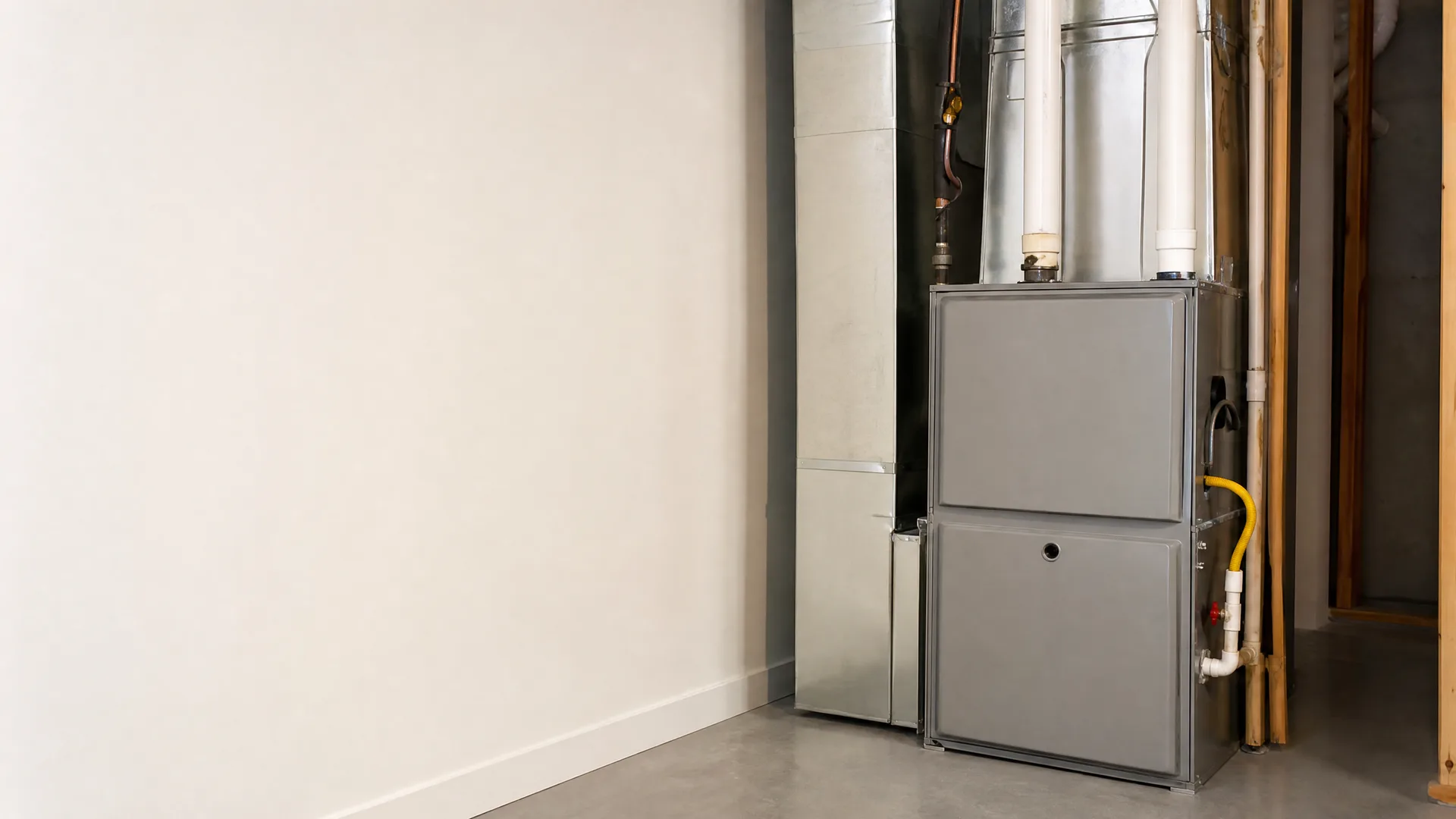
A gas furnace with sheet-metal ductwork, PVC vent pipes and copper and black piping stands against a wall in a basement with a bare light-colored wall and concrete floor.

Why the metal cracks

The heat exchanger heats up every time the burners fire and cools back down every time they shut off. Over years of that cycle, the metal expands and contracts until it fatigues at the welds or the bends. Gas furnaces in Pennsylvania run from October into April most years, so a furnace here goes through that heating and cooling cycle many thousands of times over its life. A crack usually starts small, at a seam, and gets worse with each winter.

A gray furnace with attached sheet-metal ductwork, white PVC vent pipes, copper and yellow gas lines stands against a wall in a room with a plain white wall and concrete floor.

Why a visual check isn't enough

A hairline crack can sit closed while the furnace is off and open up once the metal heats and expands during a burner cycle. That's why a technician checking for a cracked heat exchanger usually runs the furnace, sometimes with a camera fed into the exchanger itself, rather than just looking at it cold. A furnace can pass a quick glance and still have a crack that only shows itself once it's warmed up and running.

A woman in a cream sweater and jeans stands in the open doorway of a white stucco house, holding the dark door, while a man in a dark quilted jacket seen from behind walks toward the entry past potted plants.

What this means for your house

If your furnace has a crack like this, it shows up in your house before anyone can see the metal. A pilot light or burner flame that bends toward you instead of burning straight, soot around the furnace cabinet, or a smell when the blower kicks on are all worth paying attention to. So is a headache that fades when you leave the house and comes back once you're home a while, especially upstairs where warm air collects. A carbon monoxide detector near the furnace or bedrooms catches what your nose might not, and in a Pennsylvania winter, with the furnace running most of the day, that's not optional.

None of this is something to wait on or troubleshoot yourself. A cracked heat exchanger has to be confirmed by someone who can actually get eyes on the exchanger and test the air for carbon monoxide, and furnace models vary enough that this isn't a one size fits all repair. A local contractor who works on furnaces like yours every winter will know what to check first and what your particular model tends to do when the exchanger goes. Getting matched with one means you're talking to someone who already knows the equipment, not explaining your furnace from scratch to whoever picks up.

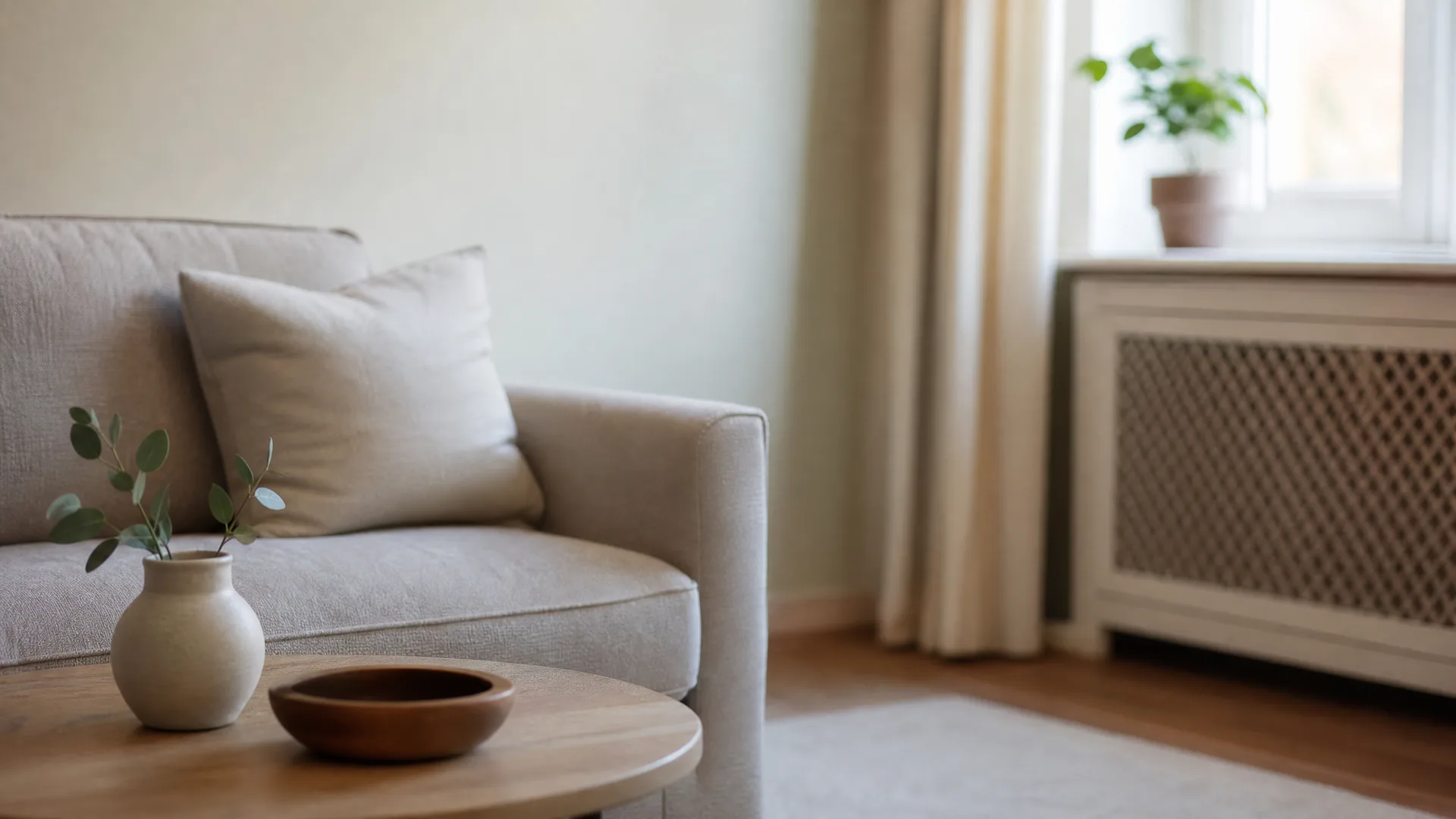
A living room corner with a beige sofa and cushion, a round wooden coffee table holding a pale ceramic vase of eucalyptus stems and a wooden bowl, and a curtained window with a potted plant above a latticed radiator cover in the background.
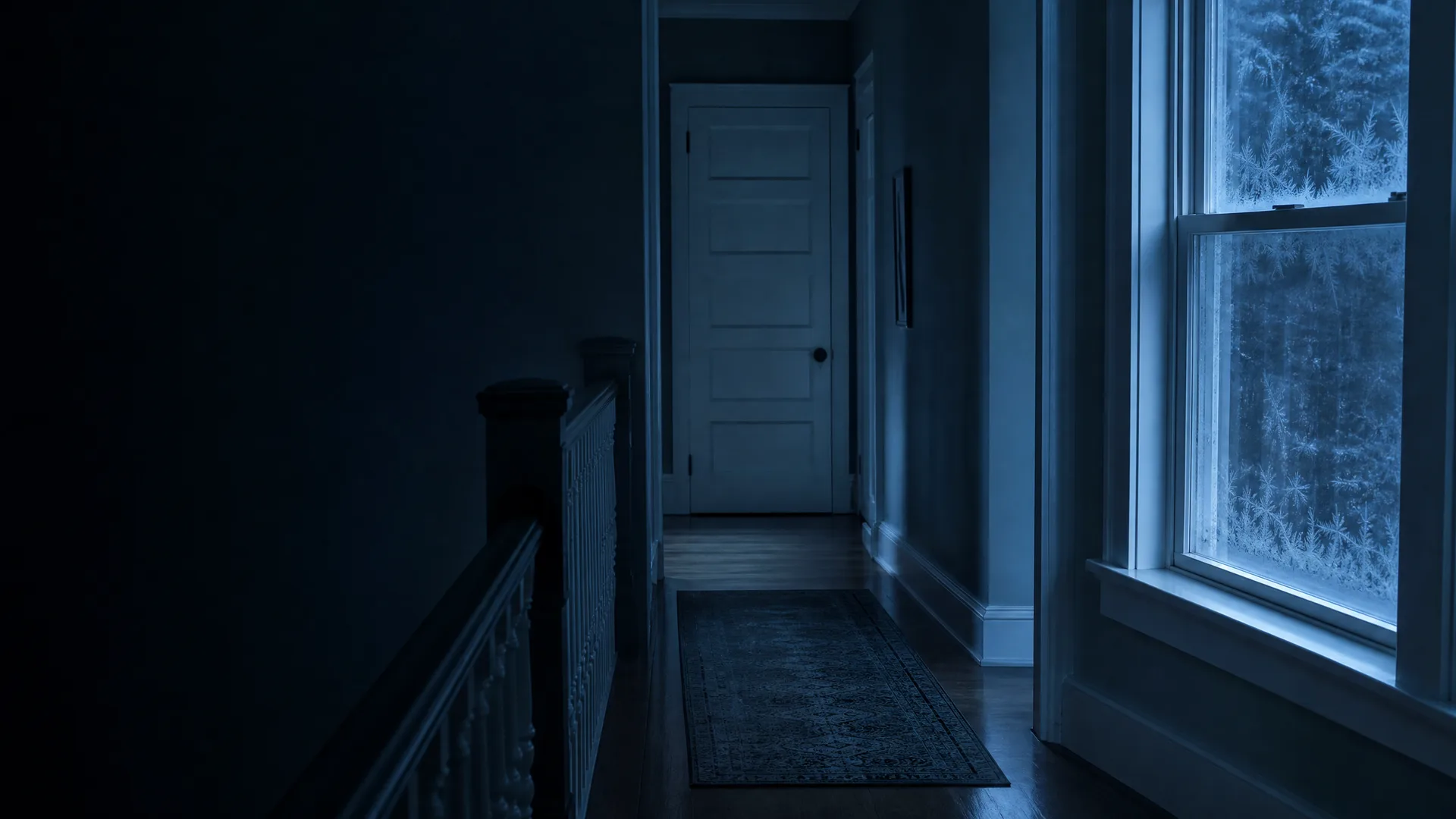
Dimly lit interior hallway at night with a closed white paneled door at the end, a long runner rug on a wood floor, a stair railing at left, and a frost-covered window admitting blue light at right.

It's two in the morning and the house is quiet. You're awake in the upstairs hallway because someone down the hall woke up with a headache that won't let them sleep. The vent at your feet isn't blowing. Outside it's the kind of January cold that settles into a Pennsylvania night and stays, and frost has crept up the edges of the hallway window. The furnace should be running right now. You stand there in the cold blue light, listening for the blower, wondering if the headache and the silence have anything to do with each other.

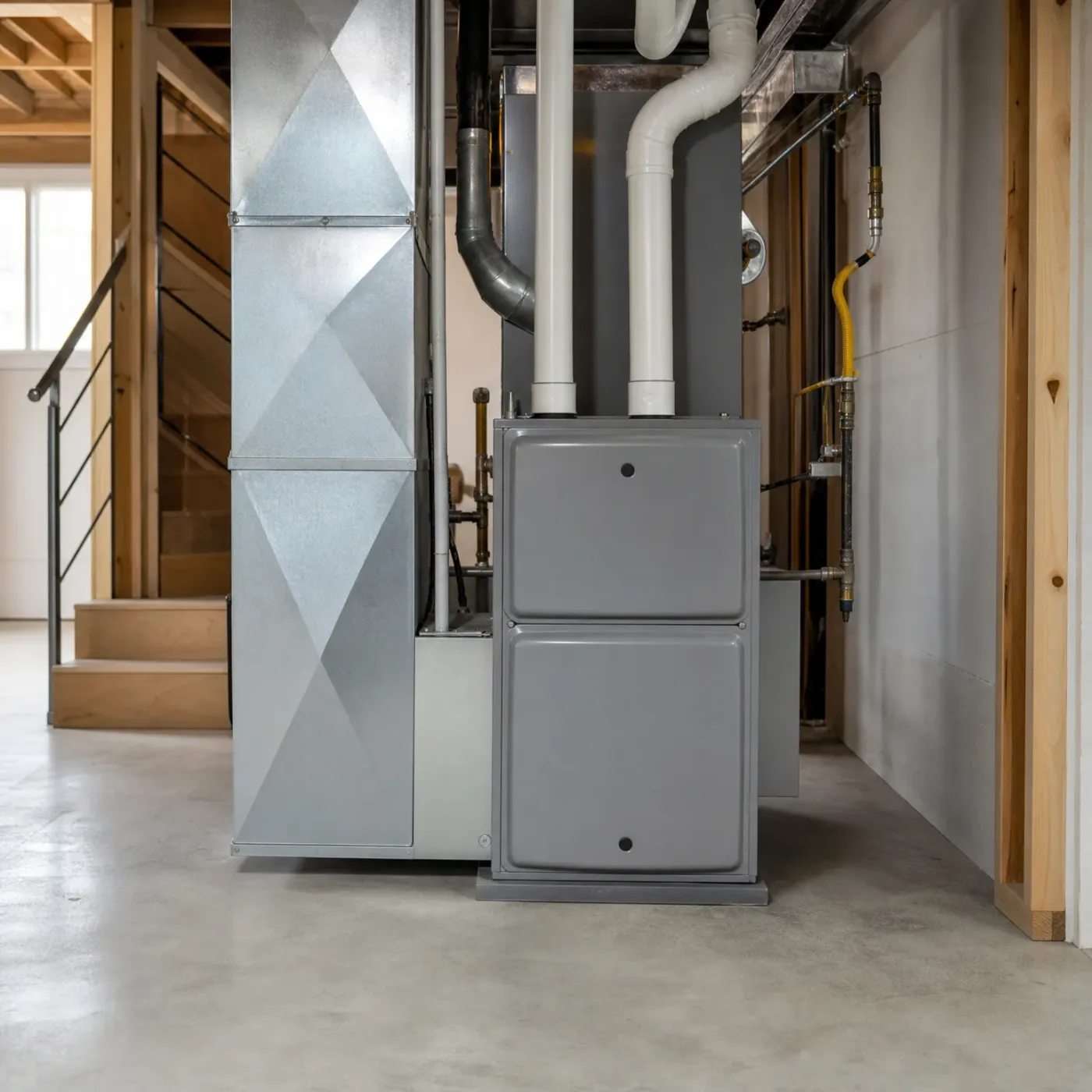
A gray high-efficiency furnace with white PVC vent pipes stands beside galvanized sheet-metal ductwork in a basement with a concrete floor, with a wooden staircase and railing at left.
A furnace like this is doing its job: steady heat, clean exhaust running out through the PVC, no smell lingering near the cabinet.
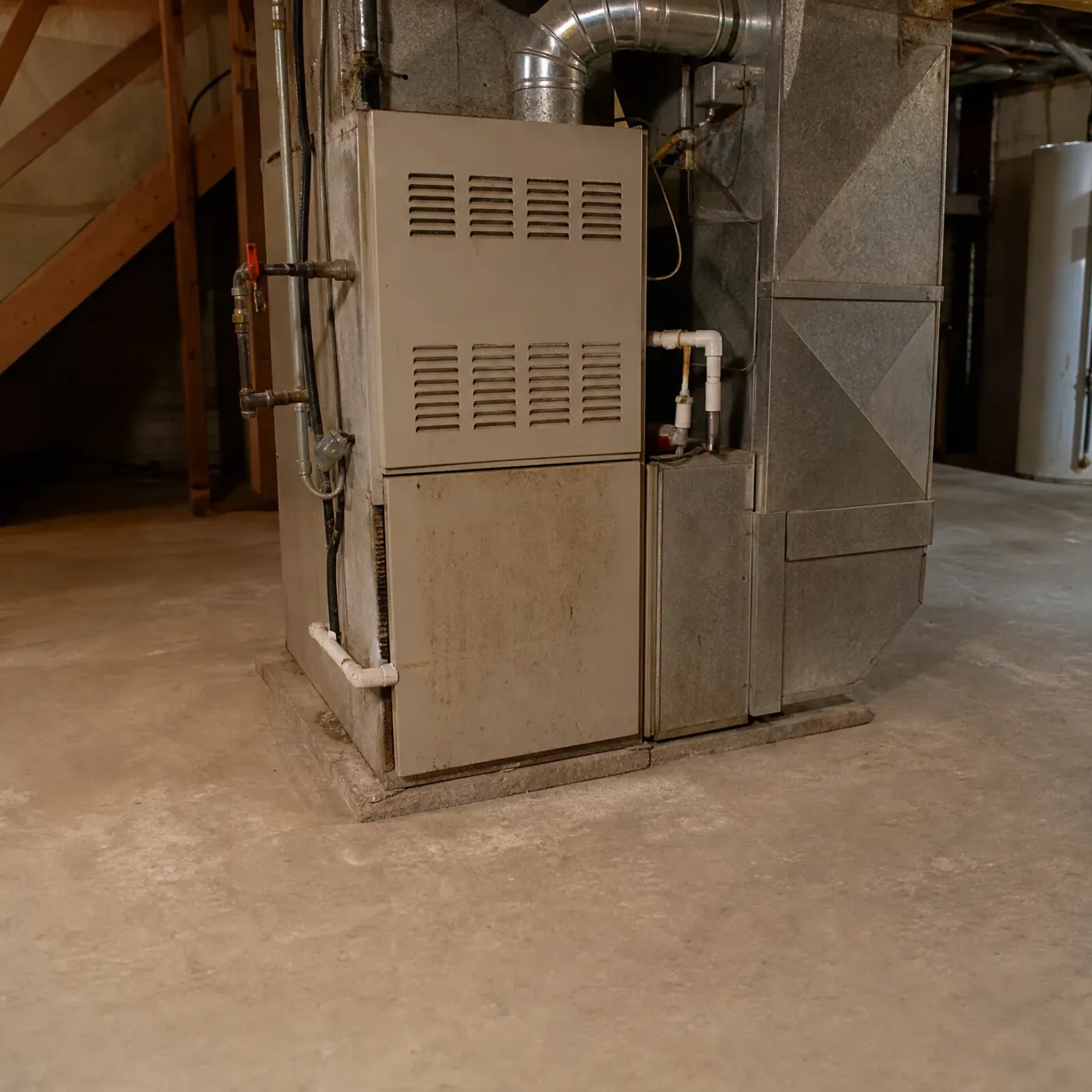
An older gas furnace with louvered panels sits on a concrete pad in a basement, connected to sheet-metal ductwork and PVC and metal pipes, with a water heater and wooden stair framing in the background.
A furnace like this needs a second look: the gas line and shutoff are right there, and a cracked exchanger gives no visible warning before it leaks.
A gray-haired man in a dark long-sleeve shirt sits on a gray sofa in a living room, looking toward a sunlit window with sheer curtains.
A gray-haired man in a dark green sweatshirt sits on a sofa in a living room, looking toward a bright window, with a houseplant, lamp, fireplace and framed art behind him.
A gray-haired bearded man in a dark green collared sweater sits on a sofa in a living room with a window, houseplant, floor lamp and bookshelves, looking off to the side.
A gray-haired man in a dark green sweater sits on a sofa in a sunlit living room, looking off to the side, with a framed landscape painting, dining table and shelving behind him.

A furnace pro near you

The pro who reaches out is licensed in Pennsylvania.

You're not committing to anything by asking.

Replacing the part

A furnace heat exchanger is not something a contractor patches. If it's cracked, the whole exchanger gets replaced, or the furnace does, depending on the age of the unit and whether the part is still made for it. A licensed contractor who works on furnaces all winter in Pennsylvania will have seen this failure before and can tell you which way makes sense for your unit once they've had a look at it. That's not something to guess at over the phone.

Why a second opinion costs you

A cracked heat exchanger is a hard thing to confirm from a quick look. It usually means pulling the burners and inspecting the metal with a camera or a mirror, sometimes running the furnace through a full cycle to watch how the crack opens with heat. Some contractors won't take that time. If you're turning off your furnace until someone qualified checks it, you want someone who does this inspection often enough to know what they're looking at, not someone guessing from the cabinet door. One contractor who knows the work beats three quick quotes.

An older gas furnace with a louvered front panel stands on a concrete basement floor beside galvanized sheet-metal ductwork, a metal flue pipe, gas piping and a flexible conduit along a concrete wall.
Before you get your furnace repair
A gray furnace with sheet-metal ductwork, PVC vent pipes and a yellow gas line stands on a concrete basement floor beside wooden stair framing.
After you get your furnace repair

A furnace technician checks this every visit

Someone who services furnaces all winter in Pennsylvania knows where the welds on a given model tend to fail and what a cracked exchanger looks like before it gets worse.

Find a local pro

A phone call doesn't

Asking around or searching for a quick answer won't tell you what's happening inside your own furnace. Someone has to open the cabinet and look at the metal.

Find a local pro

Winter nights average 23°F statewide

Winter nights in Pennsylvania average 23°F, so your furnace is firing often, all night, for months straight. That much cycling is exactly what stresses the welds in a heat exchanger. A crack that's just starting to show is easier to catch now than after another stretch of cold nights like these.

NOAA nClimDiv 1991-2020 county normals weighted by homes

  1. A technician shuts down the furnace and pulls the panels off the cabinet.

  2. A flashlight and mirror check the exchanger's welds and bends for cracks.

  3. A combustion analyzer tests the flue gas for carbon monoxide.

  4. A failed check means the exchanger or furnace gets replaced, not patched.

What would you actually notice in your own house

Walk past the furnace and take a breath. A formaldehyde-like or sharp smell near the cabinet is one sign. So is soot, a fine black dust around the burner compartment or the vents. Watch the flame through the viewing window if your furnace has one: it should burn blue and steady, not yellow or flickering. Upstairs, someone in the house might get headaches or feel sick only when they're home, and better once they've been outside for a while. Your carbon monoxide detector going off is the clearest sign of all, and it means getting everyone out and the furnace shut down. None of these happen because you did something wrong. They happen because the metal inside has cracked and needs a contractor's eyes on it.

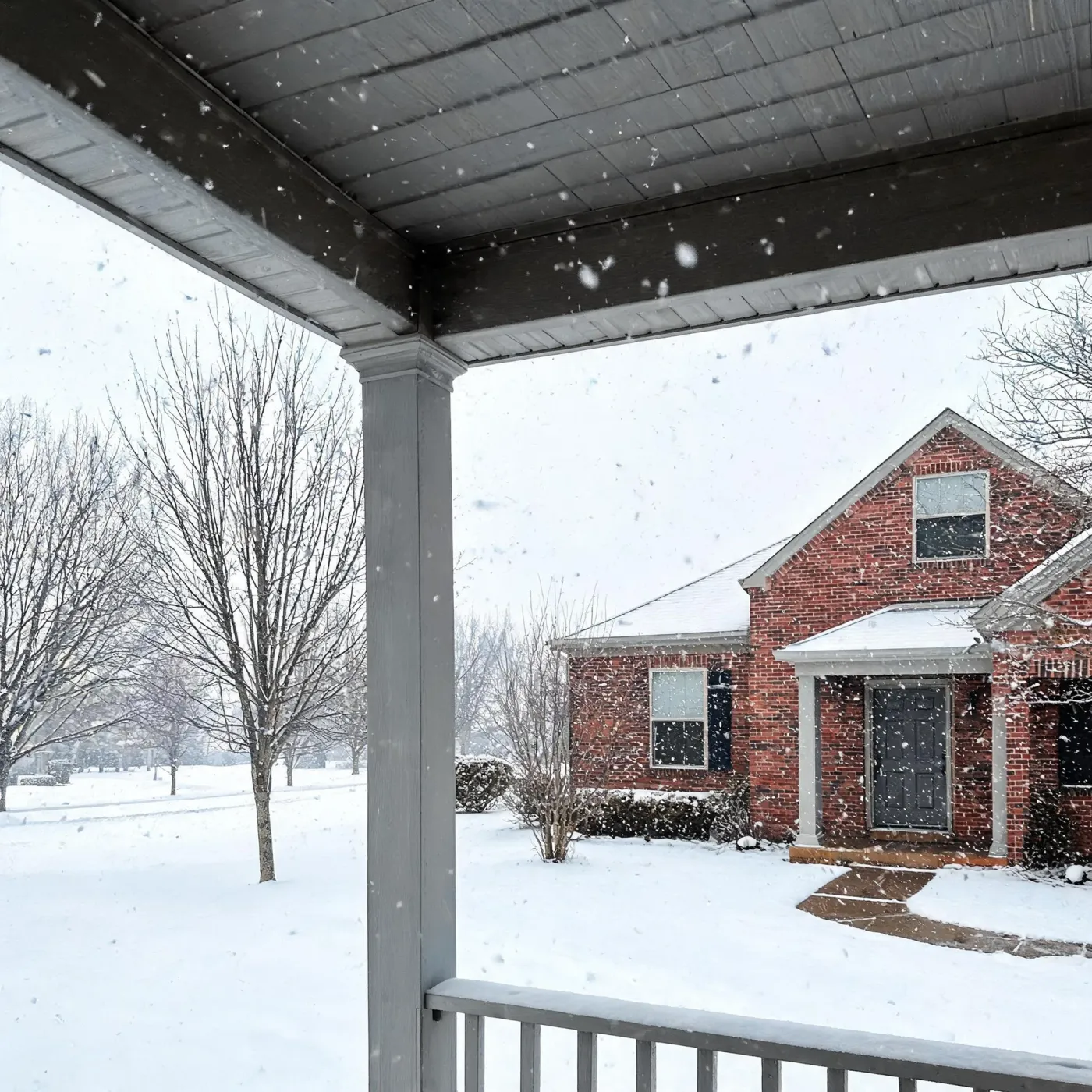
View from a covered porch with a white post and railing toward a red brick house across a snow-covered yard, with falling snow and bare trees.

Winter nights statewide average 23°F, and your furnace is what stands between that and your living room. State climate records put the average there, but Pennsylvania nights swing colder than that plenty of times each winter, and every one of those nights means the burners are firing on and off for hours without a break. That's the cycling that tires out the welds on a heat exchanger. A furnace with a crack already starting doesn't announce itself on a mild night. It shows up on the cold ones, when it's running the longest and working the hardest to keep up.

NOAA nClimDiv 1991-2020 county normals weighted by homes

A woman with shoulder-length dark brown hair in a cream knit cardigan sits in an upholstered armchair beside a window, looking off to the side, with a white bookshelf and potted plant blurred behind her.
A woman and a child wrapped together in a thick knitted blanket on a sofa, both with eyes closed, with a lit table lamp and houseplant in the dim background.

A cracked heat exchanger comes down to what you noticed: a smell near the cabinet, soot on the vents, a flame that leans wrong, or someone in the house with a headache that won't quit. None of that confirms it on its own, and none of it should wait for a second opinion from a different company. A furnace technician who works on these units all winter in Pennsylvania has seen where the welds give out on the models common here, and knows what a combustion analyzer needs to show before anyone calls it safe. That's the kind of check this is, not a guess made from the hallway. Getting matched with one licensed local contractor means one person looks at your furnace, not three different trucks showing up with three different answers. Whatever the sound or the smell was that sent you looking for this, it deserves a straight answer from someone who does this work every season, not a patch job and a shrug.

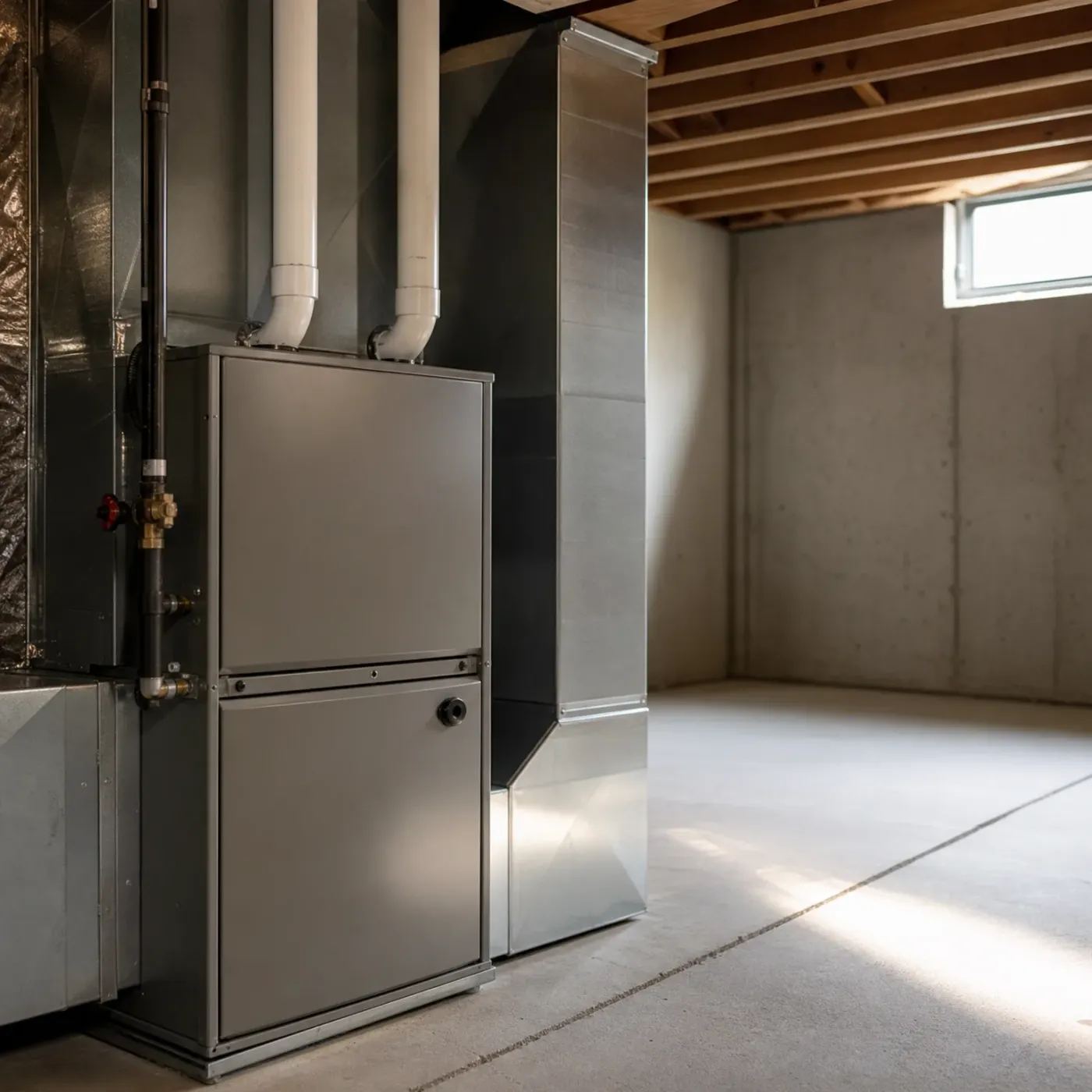
A gray furnace with PVC vent pipes and sheet-metal ductwork stands against a wall in an unfinished basement with concrete floor and walls, exposed wood joists, and a small window.

Get the right pro for your furnace

Get a licensed local pro

Your request stays with one local pro.

No charge to send it. You decide if you hire them.