


Profile view of a bearded man wearing a black baseball cap and a dark gray T-shirt against a plain light background.

Why your furnace is blowing cold air in Pennsylvania

Step 1 of 3: Equipment

A furnace blowing cold air usually means the burners aren't lighting while the blower keeps running anyway. The blower moves air on its own schedule and doesn't know whether the burners actually fired, so if a dirty flame sensor, a worn igniter, or a clogged filter stops ignition, you still feel air coming out of the vents, just not warm. Sometimes it's simpler: the thermostat fan setting is on "on" instead of "auto", so it blows constantly between heating cycles. Other times the furnace is overheating and shutting the burners off as a safety measure while the blower finishes its cycle. In a Pennsylvania winter, a furnace that won't actually heat isn't something to wait out. Most homes here run on gas furnaces, and a burner or ignition problem calls for a technician rather than a filter swap. Until it's looked at, the house keeps losing ground against the cold.

A woman with long wavy brown hair in a grey ribbed sweater sits on a couch indoors, looking toward a window, with a potted palm-like plant and fireplace behind her.
A woman with long brown hair wearing a green V-neck top and beige cardigan sits on a light sofa, looking off to the side, with a dining table, lamp and framed picture in the background.
A woman with long dark hair in a cream knit sweater sits on a beige sofa indoors, looking toward a bright window with a houseplant and framed picture in the background.
A woman with long dark hair in a green knit sweater sits on a couch indoors, smiling and looking toward a window with a blurred room behind her.

How the Burner and Blower Work

  • The thermostat calls for heat, the igniter glows, and the gas valve opens, all before the blower ever turns on.
  • A flame sensor reads the burner flame within a couple seconds, and if it doesn't, the control board shuts the gas valve back off.
  • The blower runs on its own timer set by the control board, so it can start and keep moving air even after the burners have cut out.
  • Most furnaces try to light three times before locking out and showing a fault code on the control board.
  • A cracked flame sensor or a buildup of residue on it is enough to make the board think no flame is present.
  • The blower motor and the burner assembly are wired through the same control board but run as two separate jobs.

The furnace runs two jobs off one control board, and they don't always finish together. When the thermostat calls for heat, the board starts an ignition sequence: the igniter heats up, the gas valve opens, and the burners are supposed to light within a few seconds. A flame sensor, a thin metal rod sitting in the burner flame, confirms that ignition actually happened. If it doesn't see flame, the board cuts the gas valve and tries again. Most furnaces allow three attempts before giving up and locking out, usually with a code showing on the board or a blinking light behind the access panel.

The blower is on a different clock entirely. It's told to start by the board a short time after the burners are supposed to be running, and once it starts, it keeps moving air on its own schedule. It has no way of knowing whether the burners lit on the first try, the third try, or not at all. So when ignition fails partway through, the blower can still kick on right where it's scheduled to, pushing around air that never got heated. A flame sensor that's cracked or coated with residue is a common reason the board never sees flame to begin with, even when the igniter and gas valve are doing their part correctly.

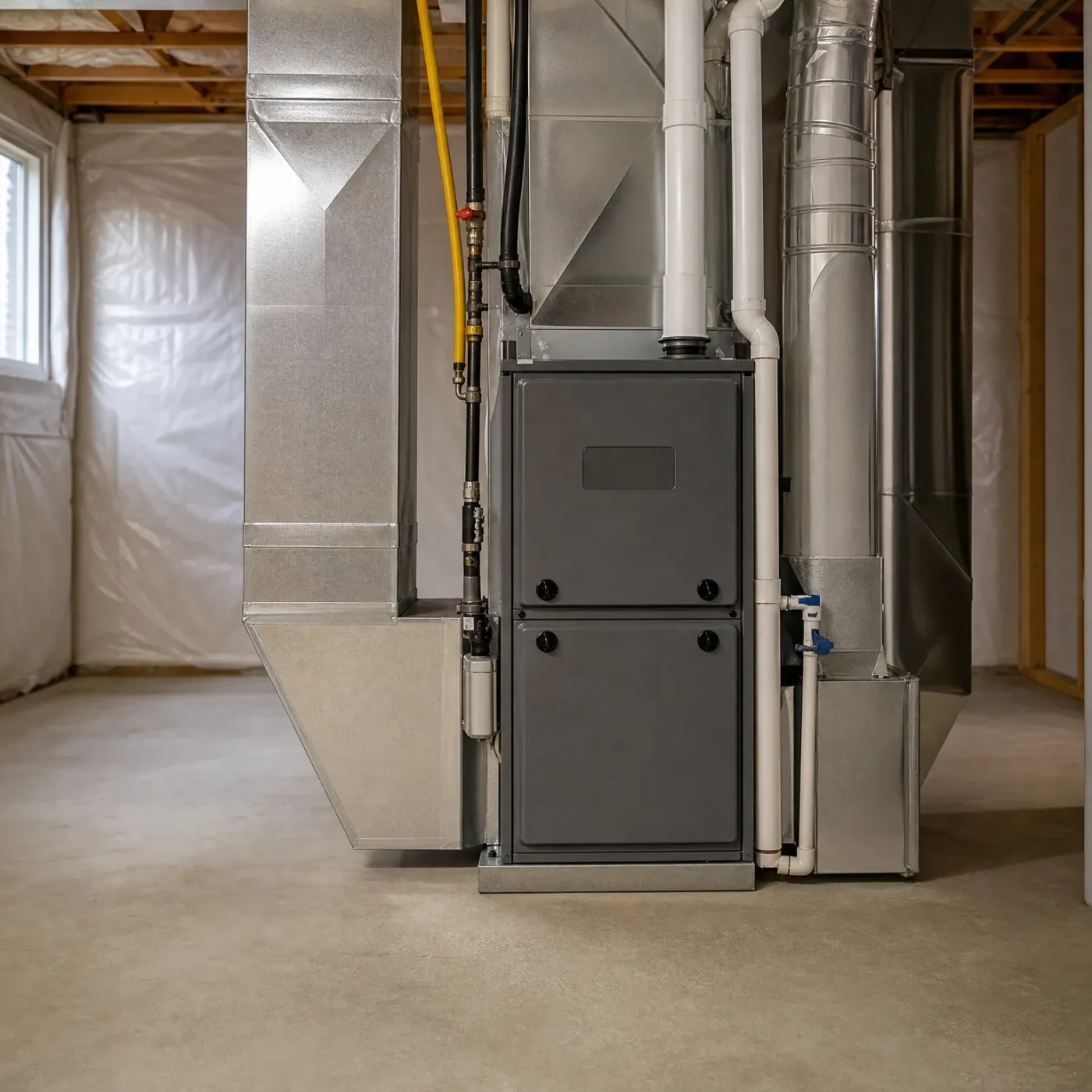
A gray gas furnace stands on a concrete basement floor, connected to sheet-metal ductwork, white PVC vent pipes, and a yellow gas line, with plastic sheeting covering the walls.
A new furnace like this one fires its burners within seconds of the thermostat's call, so the air hitting the ducts is warm almost as soon as the blower starts.
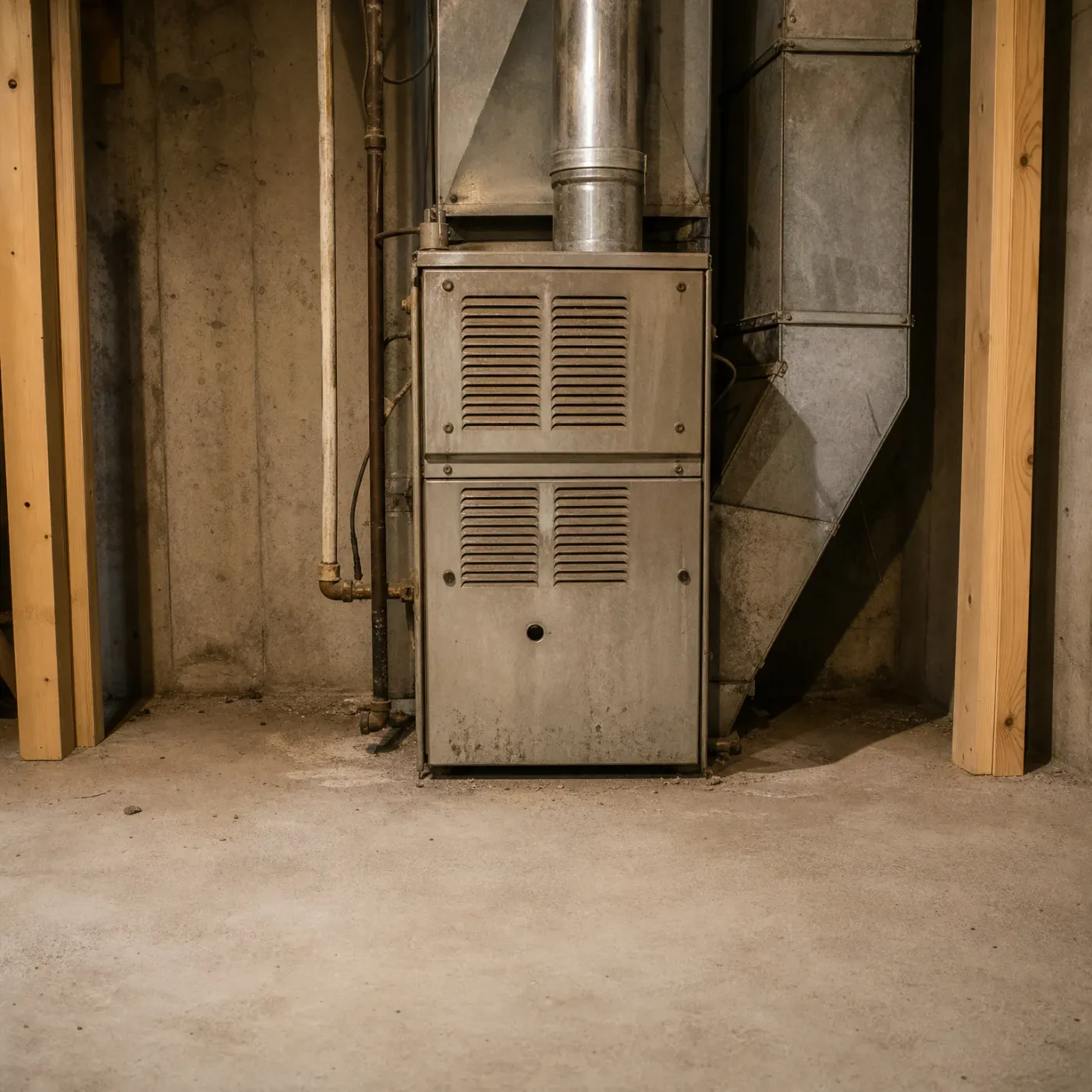
A metal furnace with louvered panels stands against a concrete basement wall, connected to sheet-metal ductwork and a round flue pipe, with wooden framing posts and a pipe nearby.
An older furnace like this one has had more cycles for a flame sensor to coat with soot or an igniter to wear thin, either of which can leave the blower running on air that never got heated.
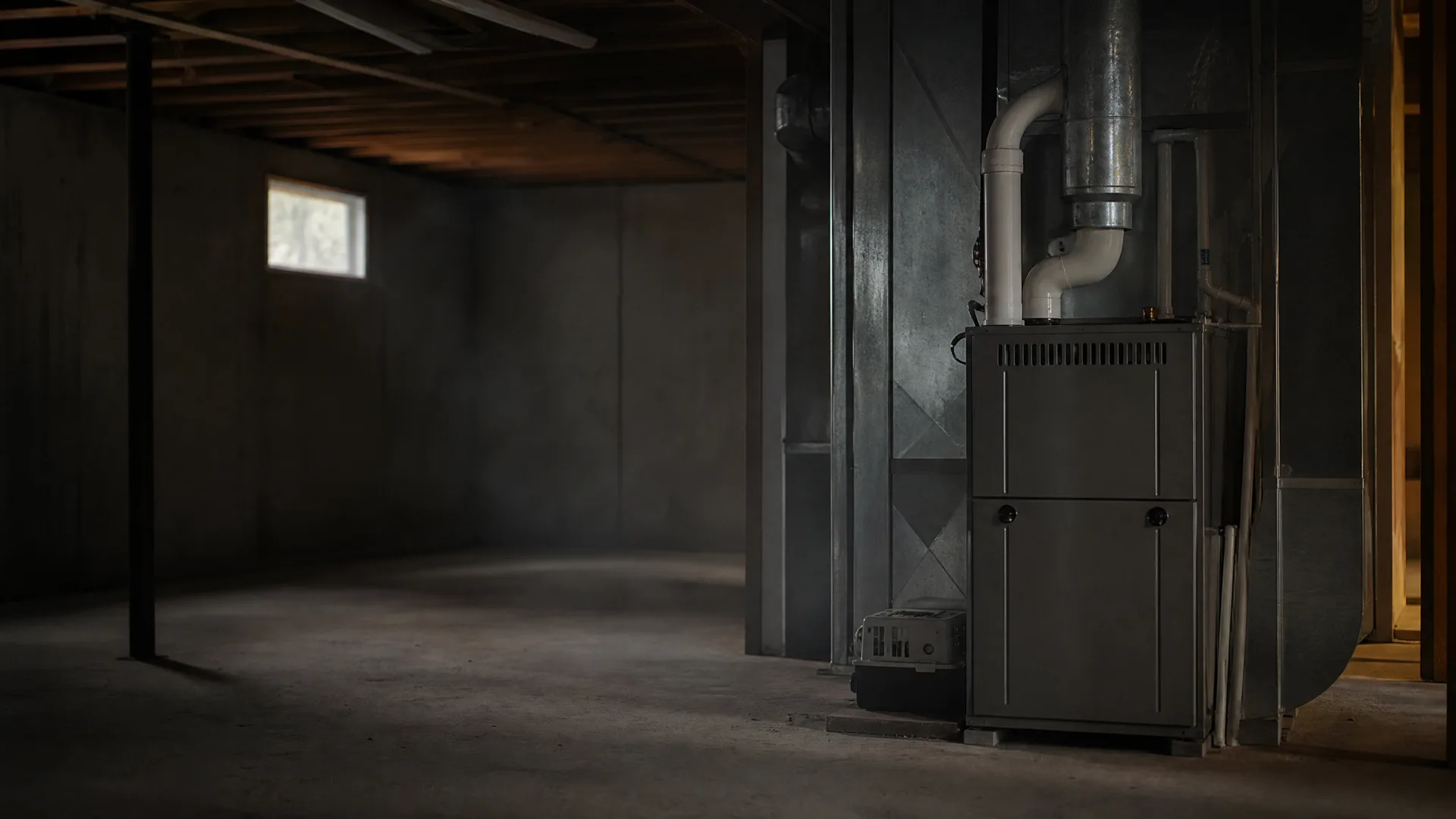
A dim unfinished basement with concrete walls, exposed floor joists, a small window, and a furnace connected to metal ductwork and PVC venting.

You're down in the basement around six, after dark already, checking why the air coming up through the vents feels wrong. The furnace sits against the wall, blower humming, but there's no light in the sight glass and no warmth coming off the cabinet. A little dust hangs in the air where the access panel's been off. You press a hand near the return and feel the air moving, cold, same as the room. Upstairs someone's asking why it's chilly. You crouch by the unit and listen to the blower keep running like nothing's wrong, waiting for a flame that isn't coming.

A local pro for your furnace repair

A furnace that keeps blowing cold air isn't going to fix itself by cycling again. Somewhere between the igniter and the flame sensor, something is stopping the burners from staying lit, and every hour it runs like that is an hour of cold air pushed through a Pennsylvania basement in weather that doesn't forgive it. Pennsylvania winters don't leave much room to wait on a guess, and gas furnaces have enough parts in that ignition sequence that finding the one at fault takes someone who's opened up more than a few of these cabinets. That's a different job than feeling the vents and hoping. Once you send the request, you're done chasing it. A contractor who works on furnaces like yours gets your details and reaches out, and from there it's their job to find what's keeping your burners from lighting, not yours.

Why the blower keeps running anyway

The blower motor and the burners answer to different parts of the control board. The blower turns on when a sensor tells it the air in the plenum is warm enough to circulate, or on a timer after the call for heat starts. It has no way of knowing if the burners actually lit. So when the flame sensor doesn't detect a flame and the gas valve shuts back off, nothing tells the blower to stop. It keeps pushing air through the ducts, now with no heat behind it, until the thermostat ends the call or someone shuts the system down.


What a dirty flame sensor actually does

The flame sensor is a thin metal rod that sits in the path of the burner flame. It works by passing a small electrical current through that flame back to the control board, confirming combustion is happening. A layer of carbon or soot on the rod blocks that current even when the flame is burning fine. The board reads it as no flame, cuts the gas valve for safety, and the burners go out. In Pennsylvania furnaces that run most days from November through March, that buildup has months to collect before it causes a problem.

Winter nights average 23°F statewide

On a 23°F night, cold air out of the vents gets noticed fast. A furnace that's actually heating would have that air warm within a minute or two of the blower starting. If it's still cold after that, the burners aren't lighting, not the cold outside.

NOAA nClimDiv 1991-2020 county normals weighted by homes

A man seen from behind raises his hand to wave at a woman standing in the open front doorway of a single-story house with gray shingle siding, white columns and a gabled porch entry.

Cold air means the burners aren't lighting

A furnace blowing cold air in the middle of a Pennsylvania winter almost always comes down to the same thing: the blower is running but the burners aren't. Whether it's a dirty flame sensor, a worn igniter, or a clogged inducer, the fix is the same first step, getting a furnace tech down to the basement to find out which part stopped the gas valve from staying open.

That's not something to track down one part at a time while the house stays cold. Once you send the request, you're not the one calling around anymore. A contractor who works on furnaces like yours gets matched to the job and reaches out to you directly, so the next call you get is about getting the burners lit again, not another number to try.

A living room corner with a beige upholstered armchair holding navy and striped cushions, a small round wooden side table with a carved bowl and a potted green plant, a framed landscape picture on a pale wall, built-in shelving, and a curtained window.
Sunlight falls across a beige upholstered sofa with a textured woven cushion and a chunky knit throw, beside a dark wood cabinet holding a ceramic vase with green leafy branches, near a white-framed window.
A sunlit corner of a room with a wooden side table holding a ceramic vase of green foliage and a wooden bowl, beside a light upholstered sofa with a knit throw and rust-colored pillow, with window shadows cast on a beige wall.
A sunlit room corner with beige walls, a white-framed window with sheer cream curtain, wood floor with a light rug, and a woven basket holding a knit blanket.
A beige ceramic vase holding a leafy green branch sits on a wooden cabinet in a corner, with sunlight through a sheer curtain casting leaf shadows on the wall.
A grey upholstered sofa with a rust-orange velvet cushion and a textured throw sits beside a window with linen curtains, next to a wooden side table holding a pale ceramic vase of olive branches.

Get the right pro for your furnace

Send it once and finding someone is no longer on you.

Get a local pro

No fee to send it, and nothing to sign.