Tell a local repair pro what your furnace is doing.
Water pooling near your furnace is not something to watch and wait on. It could be the condensate line backing up, a cracked heat exchanger, or the humidifier attached to the ductwork. Gas furnaces in Pennsylvania run hard from October through April, and whatever is causing that leak is working the whole time you're not looking at it.
Some causes are a quick fix. Others, left alone, mean a furnace that shuts itself down mid winter or water finding its way into places it shouldn't be in your house. You can't tell which one you have by looking at a puddle.
What you can do right now is stop guessing. Figuring out what's actually wrong means getting underneath the unit, checking the drain line, the condensate pump, the flue, and knowing what each one looks like when it's failing. That's not a job for searching forums at midnight or calling three companies off a list and explaining the same leak three times.
This page connects you with a contractor who works on furnaces in your area and knows what Pennsylvania winters do to them. You tell them once what you're seeing. They follow up. No quote-shopping, no retelling the story to five different voices on the phone, no sitting on hold while your furnace sits there leaking.
Pennsylvania winters don't leave much room for a furnace that's not working right. The sooner someone who knows what they're looking at gets eyes on yours, the sooner you know whether it's a simple drain clog or something that needs real attention. That part, finding someone who knows the difference and getting them to actually call you back, is what happens next.
Why is my furnace leaking water?
You walked down and found water on the floor by the furnace, maybe on the furnace itself, and you want to know what's causing it before you decide whether this can wait. You're trying to figure out if it's something minor or if it means the furnace needs to come off while someone looks at it.
Most often it's the condensate line, clogged or disconnected
High-efficiency gas furnaces produce condensation as they run, and that water is supposed to drain out through a condensate line into a floor drain or a pump. When that line clogs with algae or sediment, or comes loose at a joint, the water backs up and finds its way out of the unit instead. That's the most common reason for a puddle near the furnace. Less often, the water is coming from a cracked heat exchanger or a humidifier mounted on the ductwork nearby, and those need a closer look to rule out. With gas furnaces running hard across Pennsylvania from October through April, a slow drain problem tends to show up fast once the system is on most of the day.
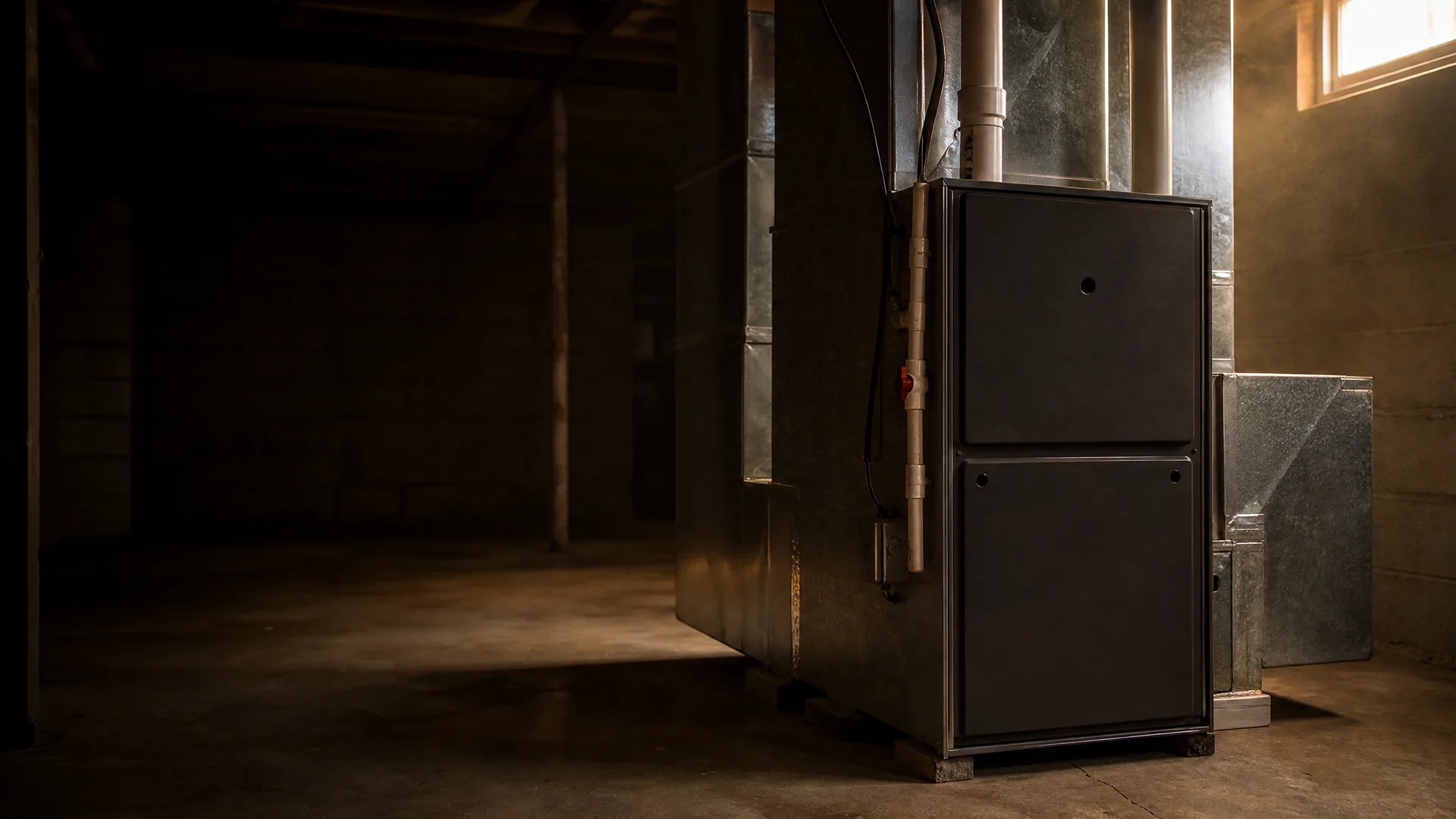
You go down for something else and the basement light catches it first, a dark ring spreading out from the base of the furnace onto the concrete. It's a Tuesday evening in November and the house upstairs is starting to feel it, that first real cold snap of the season. The furnace isn't running. You put a hand near the cabinet and it's cool to the touch. A thin haze of dust still hangs where the blower kicked on last, before it shut itself down. You crouch down and look at the water, then at the dark unit, doing the math on how many calls it's going to take to find someone who can look at this before Wednesday morning.
A furnace leaking water rarely fixes itself, and in a Pennsylvania winter you don't have months to figure it out on your own. Maybe it's a clogged condensate line, maybe the heat exchanger itself, and telling those apart means someone has to actually look at the unit, not guess from a description over the phone. Left alone, some of these problems get worse by the week, and with gas furnaces here running hard into April, that's a long stretch to leave standing water near your equipment. The usual route, searching for a contractor, calling a few, explaining the puddle and the sound it makes and when you first noticed it, then waiting to see who calls back, takes time you don't have and energy you'd rather not spend twice. You've already looked at it, you know roughly what you're dealing with. What's left is getting someone qualified to the basement to confirm it and deal with it, and that's the part worth handing off now rather than working through yourself tonight.
High-efficiency furnaces make condensate
If your furnace is a high-efficiency model, usually one with a PVC exhaust pipe instead of metal, it produces condensate as a normal part of running. That water is supposed to drain out through a plastic line into a floor drain or a pump. When that line clogs with algae or sediment, or the pump fails, the water backs up and finds the floor instead. A furnace that isn't high-efficiency shouldn't be making condensate at all, so water under one of those points somewhere else, like a cracked heat exchanger.
A clogged filter can be the start
A dirty filter restricts airflow across the coil or heat exchanger, and that restriction can cause the system to run colder than it should inside. Colder surfaces inside the cabinet mean more condensation forms, and more condensation means more water trying to drain out at once. A line that normally handles the load fine can back up when there's suddenly more water moving through it. Checking the filter costs nothing and takes a minute, and it's worth ruling out before assuming the drain line or the pump has failed outright.
Winter nights average 23°F statewide
At 23°F, your furnace is firing most of the night to keep up, and that means hours of condensate draining or, in an older unit, hours for a cracked exchanger to keep weeping. A line that's slow to drain now will back up fast on a night this cold.
NOAA nClimDiv 1991-2020 county normals weighted by homes
A high-efficiency furnace that drains fine
Condensate is leaving the furnace the way it's supposed to. The line runs clear, the trap isn't clogged, and the water you saw was a one-time overflow, maybe from a line that got bumped or a trap that needed a rinse. A contractor can confirm the line is pitched right and draining on its own, clear the trap, and check that the condensate pump, if your furnace has one, is kicking on when it should. Once that's done there's nothing to watch for. This is the cheaper outcome and the faster one, and it's common enough that it's worth ruling out first before anyone talks about the heat exchanger.
A cracked heat exchanger that needs replacing
Water tracking down from inside the furnace cabinet, especially on an older unit, can mean the heat exchanger itself has cracked and is sweating or leaking as it heats and cools. That part can't be patched. If a contractor confirms it, the furnace needs a new heat exchanger or the furnace needs to be replaced outright, and in Pennsylvania that's not a decision to sit on with cold nights ahead. Gas furnaces heat most homes here, and a cracked exchanger can also let combustion gas mix with the air your furnace is pushing through the house, which is the real reason this one gets checked out instead of watched.
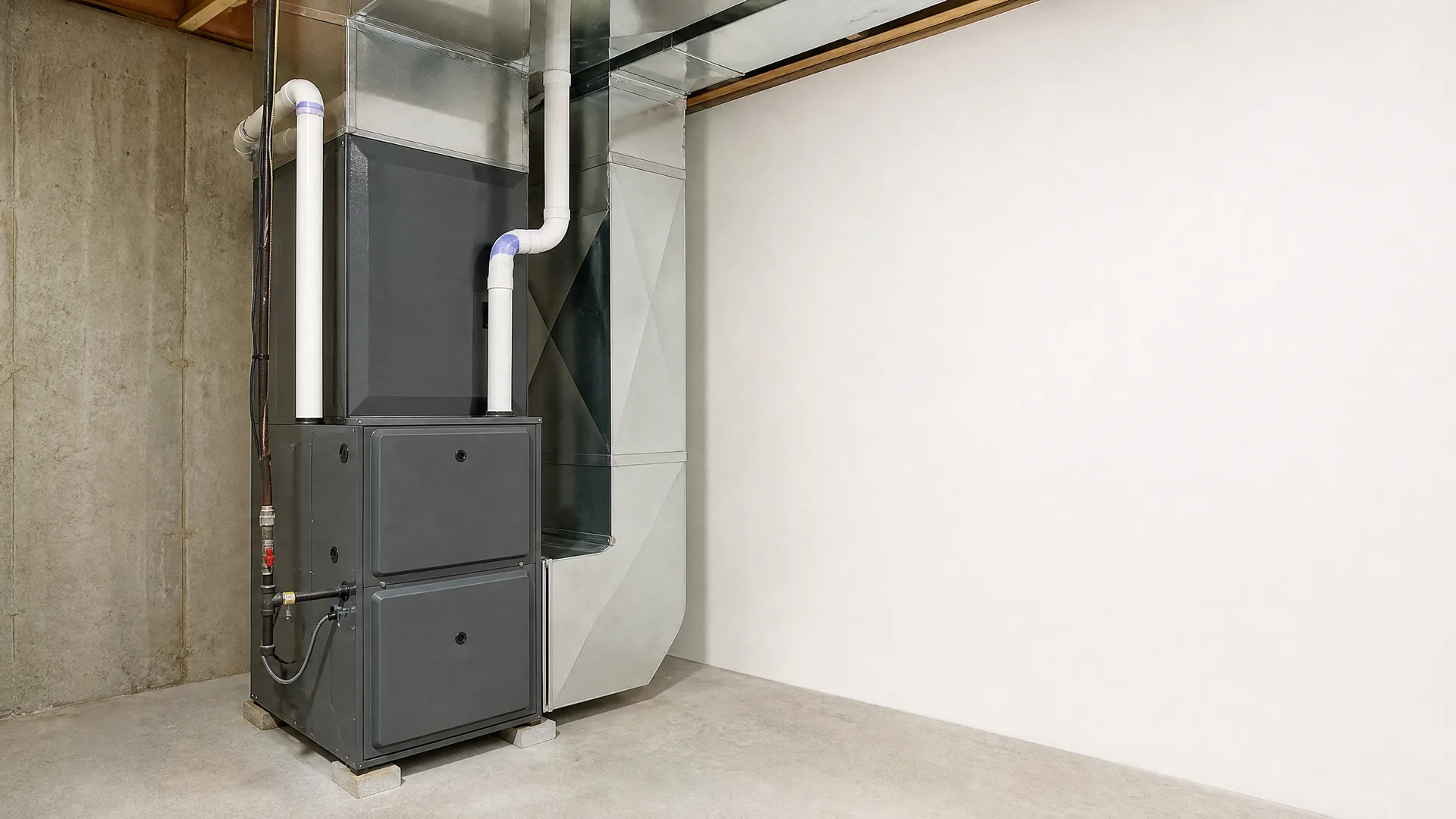
Draining the way it should
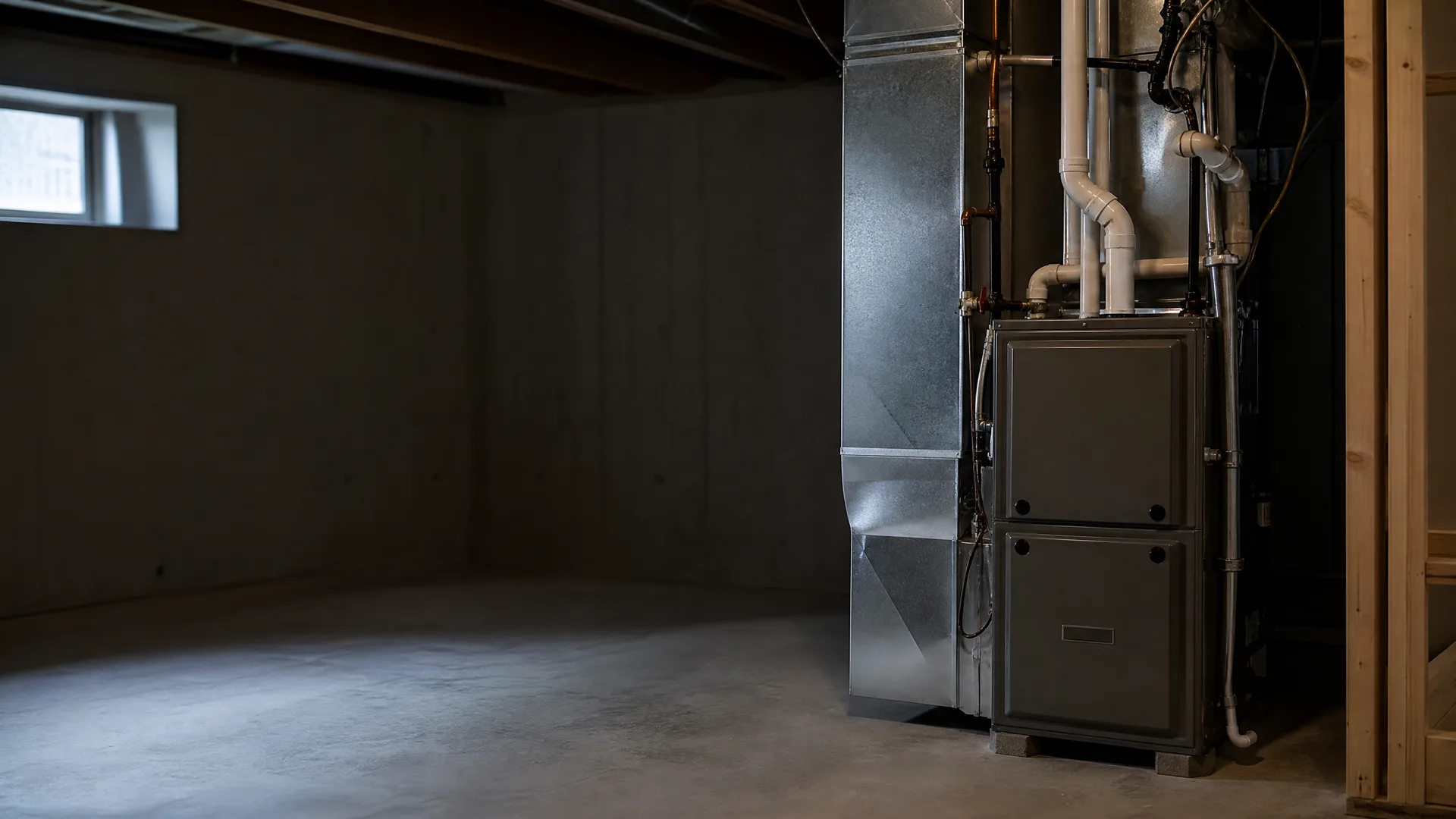
This is a high-efficiency furnace with its PVC condensate line and flue running to the outside. Water leaves through that plastic line a drop at a time, all winter, without ever reaching the floor. The copper gas line and ductwork sit dry above it.
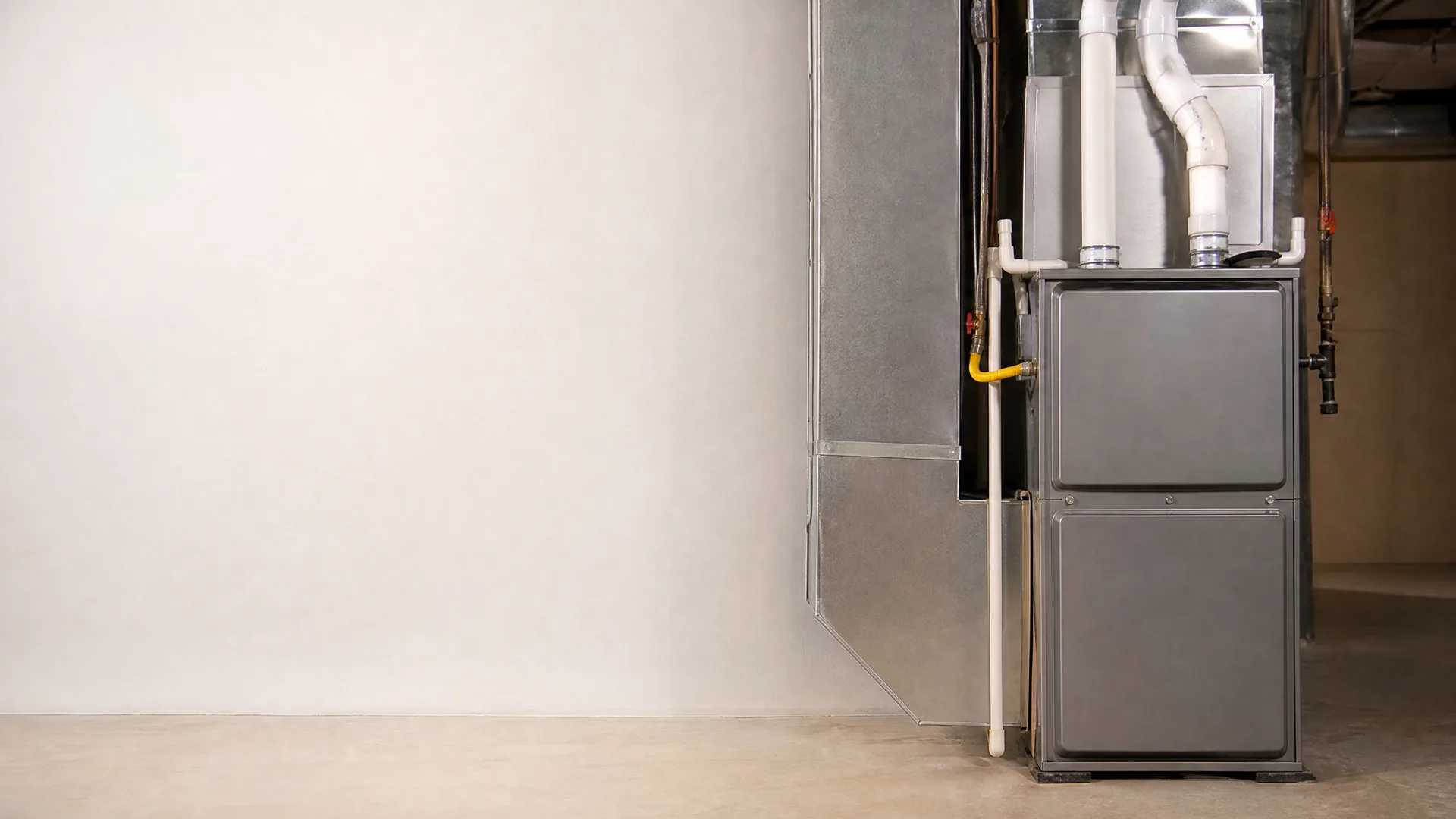
Water getting where it shouldn't
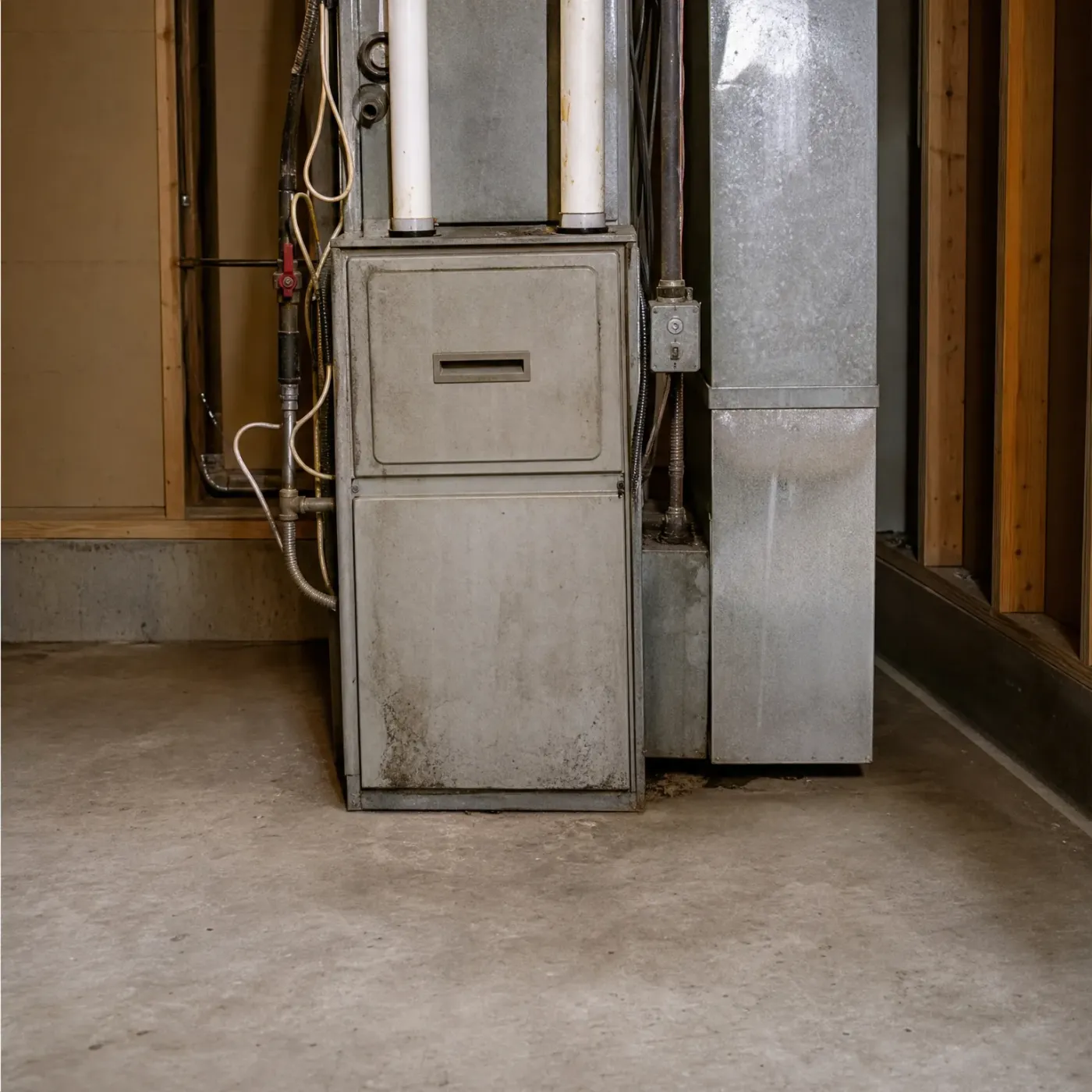
This is an older furnace in a metal cabinet, PVC exhaust and a flexible gas line running to it. Water on the concrete near a furnace like this can mean a clogged line, but on a unit this age it can also mean a cracked heat exchanger, and only someone who looks at it can tell you which.
Water by the furnace means a clogged condensate line, a failed trap, or on an older unit, a cracked heat exchanger, and which one it is decides whether this waits or not. You don't have to figure that out standing over it with a flashlight. Instead of calling one furnace company after another, describing the puddle and the model and the age of the unit each time, then sitting on quotes that don't say the same thing, you can get matched with a contractor who works on furnaces like yours in Pennsylvania and let them call you. One explanation, once. Cold is coming back, the furnace is going to keep running hard, and whatever is wrong with that line or that exchanger isn't going to settle itself out over a few more nights. Someone needs to look at it and tell you straight what's leaking and what it takes to stop it. That part, at least, doesn't have to be work you do yourself.
The right pro for this job
Answer a few questions instead of calling shop after shop.