Why your furnace won't shut off in Pennsylvania

One form replaces the calls you'd make to find a furnace pro.

Skip the calls

A furnace that keeps running is usually stuck on a call for heat it can't satisfy, or stuck because a safety switch or relay inside the control board thinks it still needs to run. The thermostat may be telling it to keep going because the house isn't reaching the set temperature, which points to a dirty filter, a blower that can't move enough air, or ductwork that's losing heat before it gets to your rooms. It can also be a failed limit switch or a relay welded shut on the control board, which will hold the blower or burners on even after the thermostat is satisfied. A gas furnace stuck on is not just an annoyance. It wastes gas, runs up your electric bill from the blower motor working nonstop, and if the issue is a bad limit switch, it can mean the furnace is overheating parts it shouldn't.

  1. The thermostat calls for heat and signals the control board.

  2. The control board opens the gas valve and starts ignition.

  3. The burners light and the blower pushes warm air through the ducts.

  4. The thermostat checks room temperature against its setpoint.

Thermostat or Furnace: Which One's Stuck

Thermostat problem

  • A thermostat set to "on" instead of "auto" runs the blower nonstop even after the burners shut off.
  • A thermostat that's reading the wrong room temperature will keep calling for heat long after the house is warm enough.
  • Loose wiring behind the thermostat can keep sending a call for heat signal even when no one touched the dial.
  • Moving the thermostat down a few degrees and watching whether the furnace responds tells you fast if this is the problem.
  • This is usually the cheaper fix, and sometimes it costs nothing at all.

Furnace problem

  • A stuck relay or a failing control board can keep the burners or blower running regardless of what the thermostat says.
  • A cracked heat exchanger can trip a safety switch that keeps the blower running to clear heat even when it shouldn't be.
  • A dirty flame sensor sometimes causes short cycling that looks like the opposite problem, so a tech has to check it either way.
  • If the furnace keeps running even after you shut the thermostat off completely, the problem is inside the furnace, not the thermostat.
  • A furnace that won't shut off from a control board or safety switch issue needs a licensed tech to open it up and test the parts.
A woman in a knitted shawl sits in a living room with a fireplace, shelves, a sofa with cushions, and a lamp by a bright window, looking off to the side.
A woman with long brown wavy hair in a green shirt over a white top stands in a living room with built-in white shelves, a ceiling fan, a potted plant and a sliding glass door.
A woman with shoulder-length gray-streaked hair in a light gray knit sweater stands smiling and looking off to the side in a living room with a sofa, houseplant, framed picture, and sunlit sliding glass door.
A woman with shoulder-length curly gray hair wearing a gray knit sweater stands near a window with a sheer curtain, looking to the side, with a blurred interior room behind her.
A closed silver laptop and a glazed ceramic mug on a wooden table, with a blurred kitchen counter, potted plant, cutting board and window in the background.

A furnace that won't stop running costs you more than the gas bill

You'll notice it first as a house that's too warm no matter where you set the thermostat, or a blower that never seems to rest. With power rates what they are in Pennsylvania, a furnace stuck running pushes that cost onto every bill until someone shuts off the gas valve by hand or the limit switch finally trips. Left alone, a stuck relay or a cracked heat exchanger can strand your household without heat on the coldest night of the year, right when you need it working.

Finding someone to look at it shouldn't be its own chore. You don't need to call around to three companies, explain the same stuck-on furnace three times, and then sit with three quotes trying to guess which contractor actually knows your equipment. This connects you with one licensed contractor local to Pennsylvania, someone who works on furnaces like yours every winter and knows which part tends to fail first.

Interior corner of a dining room with a round wooden table, a ceramic vase holding olive branches, a dark spindle-back chair near a curtained window, and a sideboard with a lamp against beige walls.
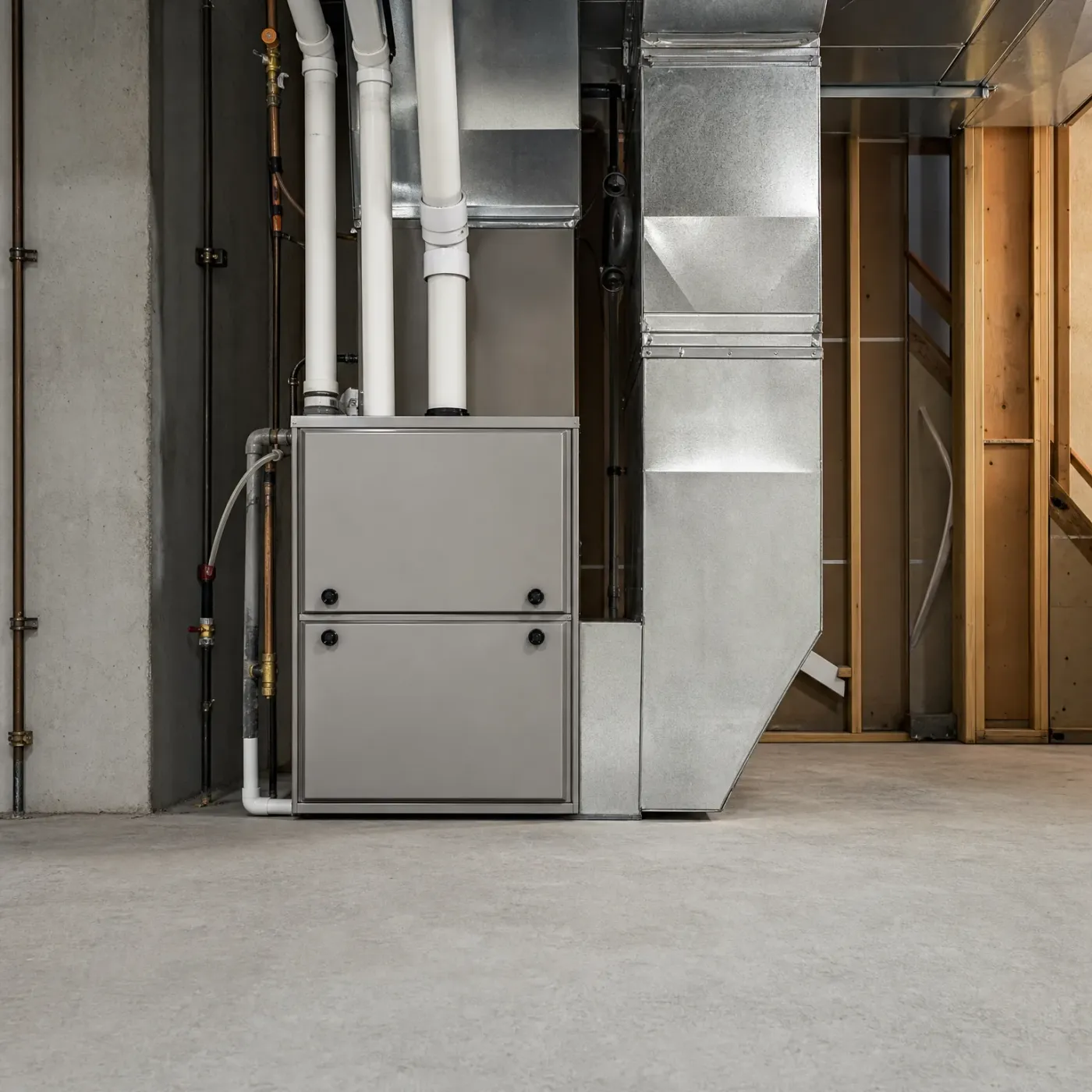
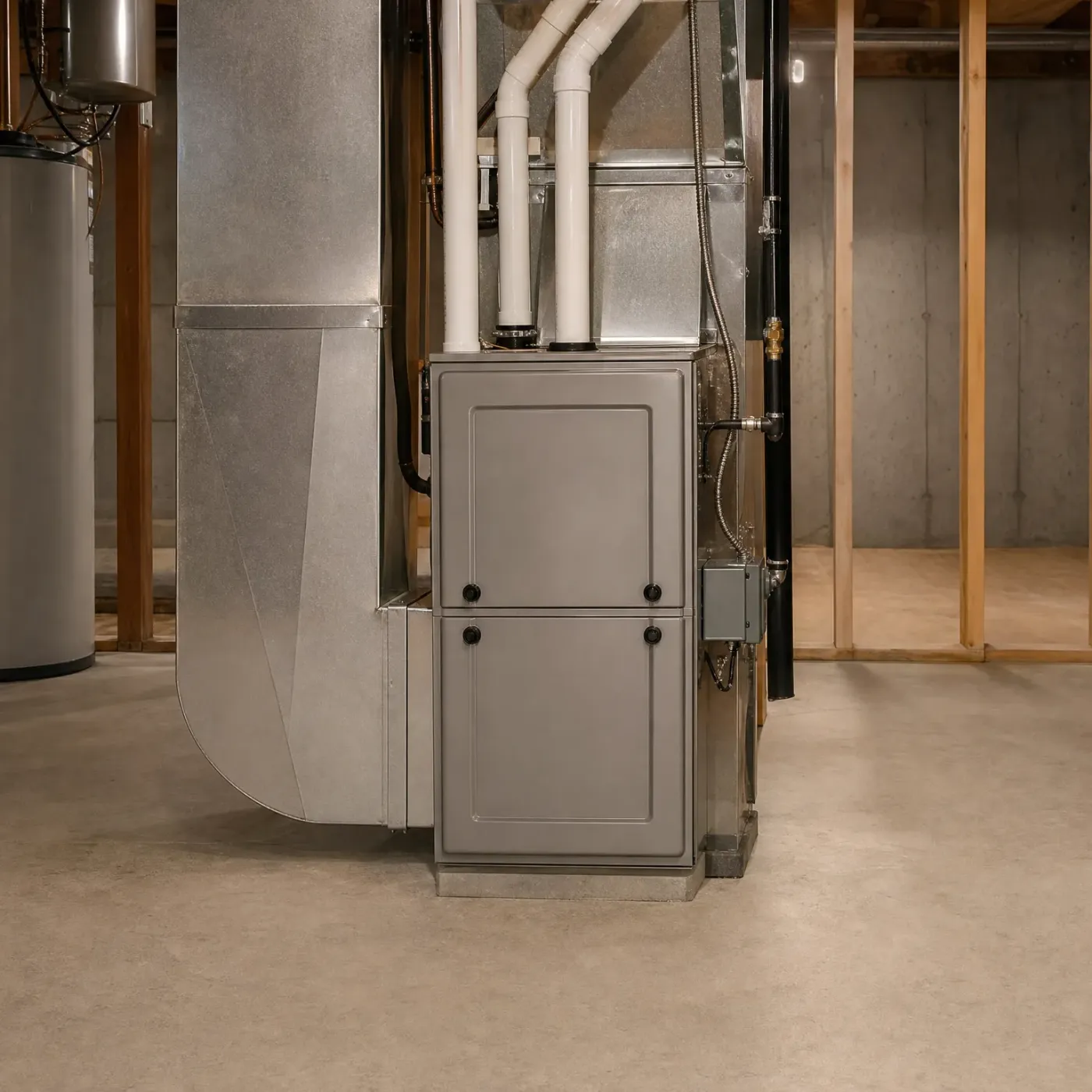
A gray high-efficiency furnace stands on a concrete basement floor beside galvanized sheet-metal ductwork, white PVC vent pipes, copper and black piping, and unfinished wood stud framing.

Running normally

The burners fire, the blower pushes air through the ducts, and after a few minutes the house reaches your setpoint. The thermostat sees it, the call for heat ends, and the furnace shuts down until the house cools again. Short runs, long rests.

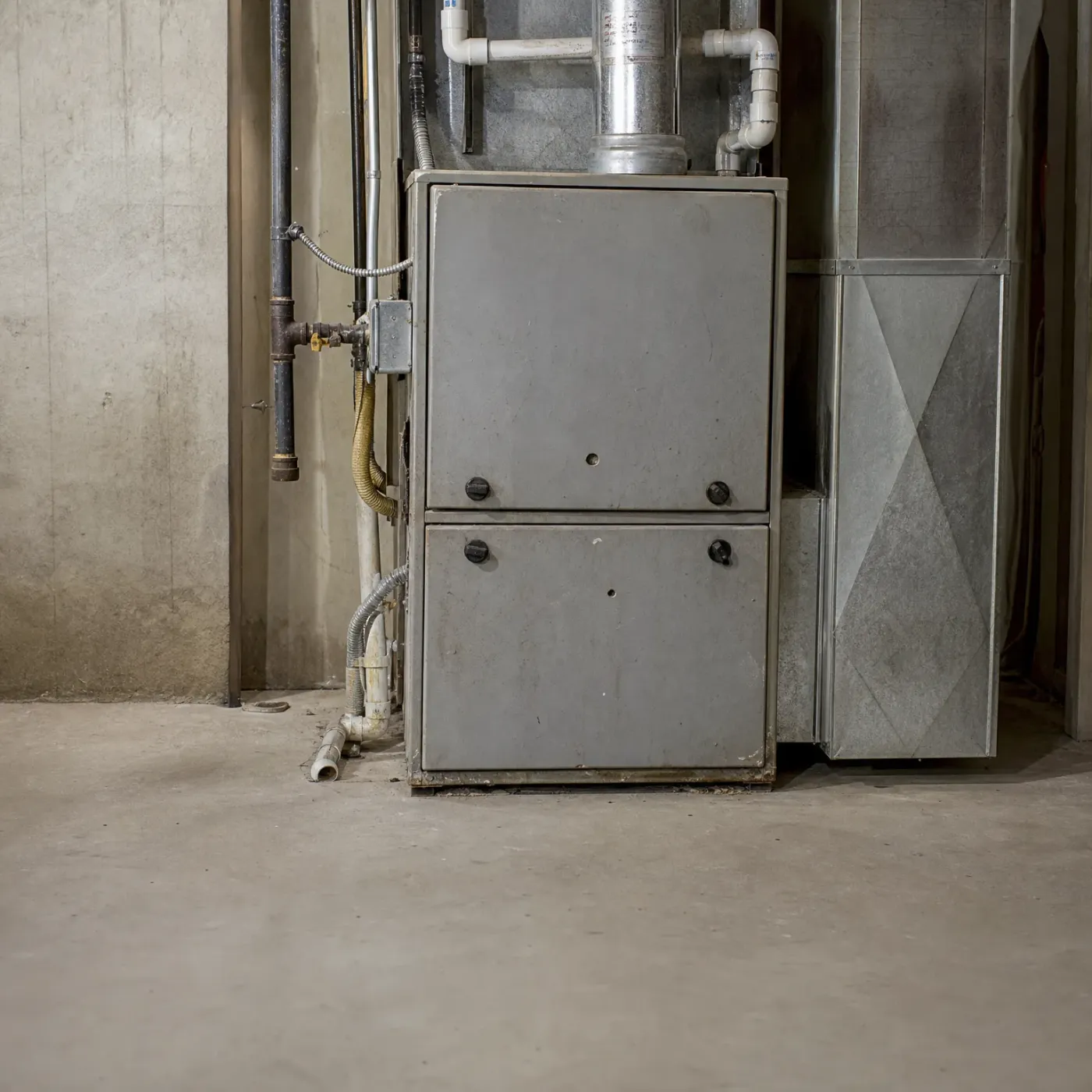
A gray furnace with two access panels stands on a concrete basement floor beside sheet-metal ductwork, with pipes, flexible conduit and an electrical box on the concrete wall to the left.

Stuck running

The burners stay lit or the blower keeps blowing well past the point the house should be warm. Nothing inside the cabinet looks wrong from the outside, but a stuck relay, a bad limit switch, or a thermostat reading the wrong temperature can keep it going for hours. Only a look inside the panels tells you which.

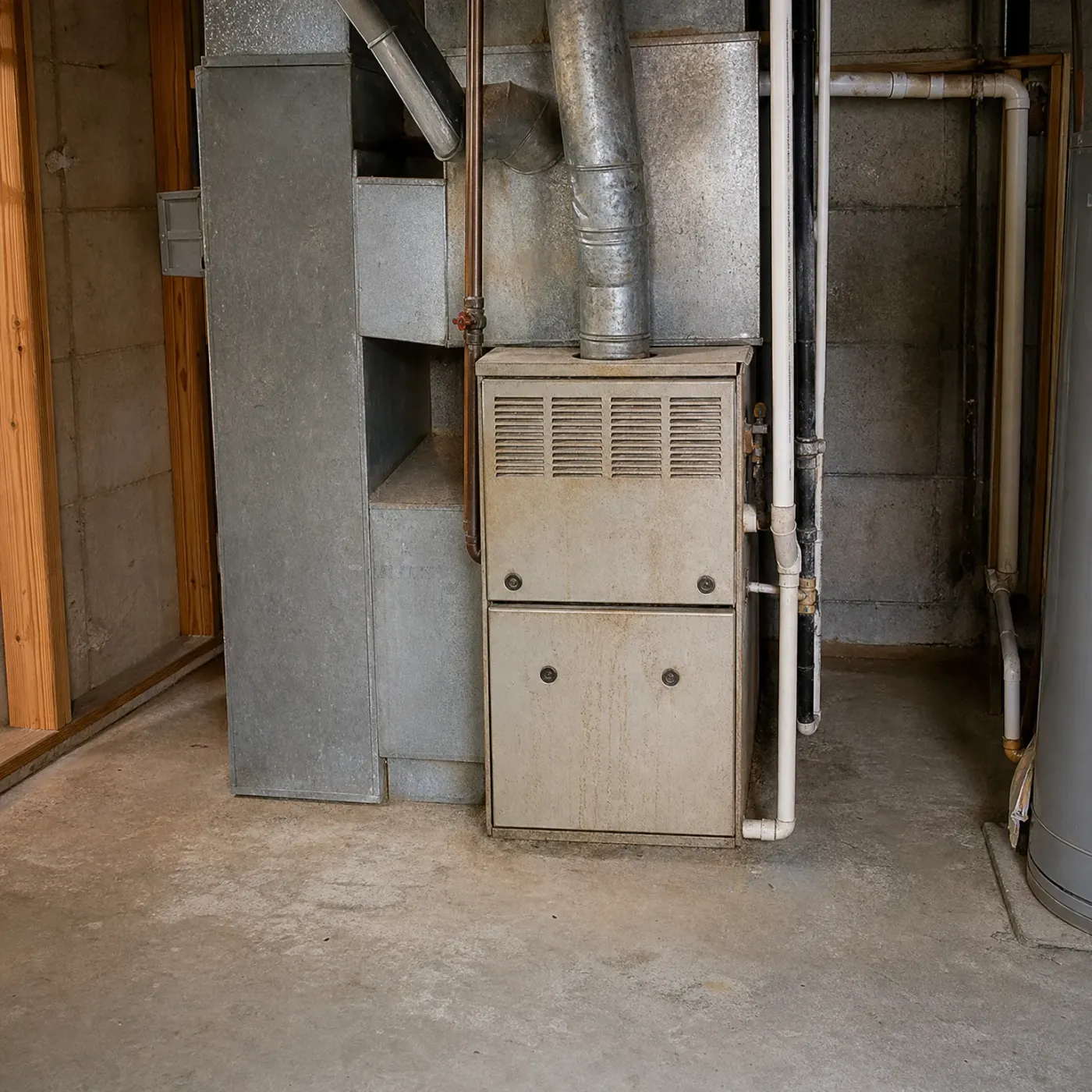
A beige gas furnace with a metal flue pipe stands in a basement against concrete block walls, beside sheet-metal ductwork, copper and white plastic pipes, and a water heater at right.
Before you get your furnace repair
A gray high-efficiency furnace with white PVC vent pipes stands beside sheet-metal ductwork and a water heater in an unfinished basement with concrete walls and wood framing.
After you get your furnace repair

Explain it one time

A furnace that won't shut off isn't something to keep watching through another cold stretch. It could be a stuck relay, a thermostat in the wrong position, or a control board that needs a trained eye to read correctly, and sorting that out over the phone with five different companies wastes the time you don't have while your gas bill climbs. This match sends your request to one licensed contractor working in Pennsylvania, someone who services furnaces like yours all winter and has seen this exact problem before, not a list of strangers competing for the job. You explain what's happening once. No sorting through quotes, no repeating yourself to company after company, no guessing which of five callbacks to trust. Just a local contractor who knows what a furnace that won't stop usually means, and can look at yours before another week of it running nonstop drives your heating bill higher.

Why the limit switch matters

Every gas furnace has a high limit switch that watches the temperature inside the cabinet. If the blower can't move enough air, heat builds up around the burners and the limit switch is what's supposed to catch that and shut the gas valve down. When that switch fails or reads wrong, the furnace can keep firing well past where it should have stopped on its own, and that's a different repair than a thermostat problem or a stuck relay.

What a clogged filter does

A dirty filter doesn't stop a furnace from running, it just makes the blower work harder to pull air through it. Less air moves across the heat exchanger, the cabinet runs hotter than it should, and the furnace takes longer to satisfy the thermostat. On some systems that extra strain is enough to trip the high limit switch on its own, which can look like a control board problem when the real cause is sitting in the filter slot.

A woman with dark hair in a bun sits wrapped in a chunky knit blanket on a couch with a child resting his head on her shoulder, eyes closed, beside a lit lamp and bookshelf indoors.
A smiling older woman with gray hair in a cream knit sweater stands in a dimly lit kitchen beside a window showing snow outside, with a round loaf of bread on the counter in the foreground.

Winter nights average 23°F statewide

On a 23°F night, your furnace has a long call for heat to satisfy before the thermostat is happy. If it's stuck running past that point, you won't just feel it in a too-warm house. You'll see it on the bill that comes after that stretch of cold.

NOAA nClimDiv 1991-2020 county normals weighted by homes

Where this leaves you

  • A furnace that won't shut off is stuck on a call for heat it can't satisfy or stuck by a switch or relay that thinks it still needs to run.
  • The thermostat, the limit switch, the control board, and the blower all have to agree before the furnace will stop, and any one of them can hold it open.
  • A furnace technician who services this equipment every heating season in Pennsylvania has likely already seen the exact failure behind your stuck furnace.
  • You get matched with one licensed local contractor instead of fielding calls from several companies trying to win the job.
  • Letting a furnace run unchecked through another cold stretch means a higher gas bill and more wear on parts that are already struggling.
  • Once a contractor reads the control board and traces the wiring, the furnace can shut off the way it's supposed to again.

A furnace that won't shut off almost always comes down to one of a handful of parts not agreeing with the rest: the thermostat, the limit switch, the control board, or the blower. Somewhere in that chain, something is stuck, and the furnace keeps running because nothing has told it, correctly, that the house is warm enough. You don't need to find which one it is. You need someone who can look at the control board, trace the wiring, and know within a few minutes what's actually holding the call for heat open.

That's the part a local contractor brings that a search result can't. Someone who works on furnaces all winter in Pennsylvania has likely seen this exact failure before, maybe this month. They know a stuck relay from a thermostat set wrong, and they know what a limit switch failing actually looks like versus a blower that's not moving enough air. That's not guesswork. It's the kind of thing that becomes familiar when you're in furnaces every week the whole heating season.

When you ask for help through this page, you're matched with one licensed contractor local to you, not a handful of companies all calling to bid on the job. No explaining the problem five times, no sorting through quotes. Just one call, from someone who already knows what to check first.

Left alone, a furnace stuck running doesn't fix itself. It keeps burning gas, keeps straining parts that are already struggling, and keeps the house too warm while the bill climbs. Getting it looked at stops that.


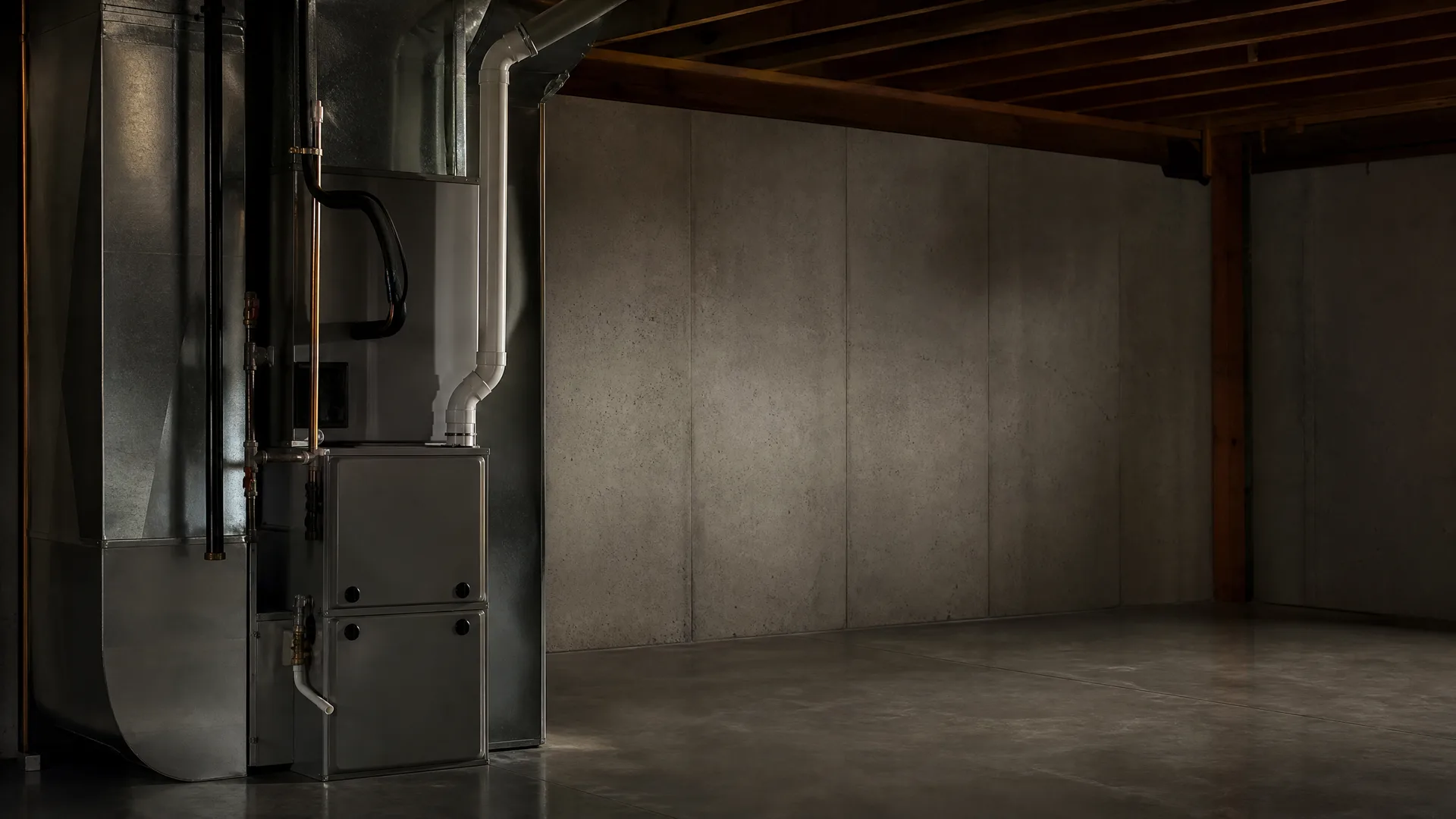
A dimly lit basement with concrete floor and walls, exposed wood joists, and a furnace with sheet-metal ductwork and copper piping on the left side.

Skip the calls to every shop

The pro who reaches out is licensed in Pennsylvania.

Step 1 of 3: Equipment